Update per corrections as of Nov 10, 2025. As we look towards the future, the 2026 ISO revisions are poised to bring about significant changes in the world of certification. These updates will not only refine existing standards but also introduce new considerations that are crucial for modern businesses. Let's dive into what these revisions mean for your certification strategy and how you can best prepare for them.
Key Takeaways
- ISO 2026 revisions will focus on climate change, ethical leadership, and stakeholder engagement.
- Businesses should conduct a gap analysis to identify areas needing updates.
- New requirements will enhance corporate governance and align with global sustainability goals.
- Training and development programs are essential to prepare teams for new standards.
- Consulting services can provide valuable support during the transition process.
In the world of management systems, staying ahead means staying informed. As we move through 2025, several pivotal ISO standards are undergoing revisions that will shape compliance expectations, business strategies, and the way organizations demonstrate their commitment to quality, safety, and sustainability.
Here’s a concise update on what’s underway: With these updates, organizations must adopt a proactive approach to ensure compliance and leverage the benefits of enhanced certification strategies. The revisions are designed to address contemporary challenges, such as climate change and ethical governance, making ISO standards more relevant than ever.
Introduction to the 2026 ISO Revisions
The International Organization for Standardization (ISO) periodically updates its standards to reflect evolving industry practices and global challenges. The upcoming 2026 revisions to ISO 9001, 14001, and 45001 are particularly noteworthy. They introduce new dimensions that businesses must integrate into their certification strategies. These are done through technical committees and can be monitored by watching the technical committees (e.g., ISO/TC 176 and ISO/TC 207) for preview drafts.
Overview of ISO 9001, 14001, and 45001
ISO 9001 focuses on quality management systems, ensuring that organizations consistently meet customer and regulatory requirements. ISO 14001 addresses environmental management, guiding businesses in minimizing their environmental impact. ISO 45001, on the other hand, is centered around occupational health and safety, promoting safe and healthy workplaces.
📈 ISO 9001:2015 – New Release in September 2026
Yes, it’s official: a revised ISO 9001 is on its way in September 2026. Early feedback from international working groups suggests the update will emphasize knowledge management, change resilience, and digital integration (trending topics but not explicitly stated in the DIS. They may appear in guidance or future interpretations, but they are not core requirements in the draft). into core quality processes.
💡 Why it matters: This is the most widely adopted ISO standard globally. Companies that adopt early will differentiate as leaders in operational excellence and future-readiness.
🌿 ISO 14001:2015 (Environmental Management) – Revision Coming January 2026
A confirmed revision is scheduled for release in January 2026, reflecting global urgency around climate change, biodiversity, and circular economy principles. Companies will be expected to demonstrate stronger environmental governance and measurable impact.
💡 Why it matters: Companies already certified should begin internal gap assessments now to ensure smooth transition and maintain credibility in sustainability reporting.
🛠️ ISO 45001 (Occupational Health & Safety)
Worker safety is taking center stage globally. The next revision of ISO 45001 will likely expand focus on mental health (This is a likely trend, but not confirmed in any official draft yet.), psychosocial risk, and the role of leadership in fostering a culture of wellbeing. Draft proposals are already sparking meaningful discussion across industries.
💡 Why it matters: More than compliance—it’s about protecting your most valuable asset: people.
🔧 ISO 13485 (Medical Devices – Quality Management Systems)
ISO 13485 is currently under revision, with updates expected to better align with evolving medical technologies, risk management, and global regulatory frameworks. The medical device sector is under heightened scrutiny, especially post-pandemic, making this revision essential for manufacturers and suppliers alike. ISO 13485 was voted to remain the same. (The irony is that as of Feb 2026, the FDA will begin to do evaluations based on ISO 13485: 2016 and not QSIT, in my opinion 13485 should have been reviewed a year ago)
💡 Why it matters: If your organization is in healthcare or supplies to that sector, early awareness and preparation will support compliance and market confidence.
Significance of Upcoming Changes
The 2026 revisions are significant because they incorporate broader societal and environmental issues into the standards. By aligning with global trends, such as sustainability and ethical governance, these updates ensure that ISO certifications remain relevant and beneficial to organizations worldwide.
Rationale Behind the Revisions
The rationale for these revisions is to better equip organizations to tackle modern challenges. With increasing emphasis on sustainability and ethical practices, ISO aims to provide a framework that supports responsible business operations. This shift is not just about compliance; it's about embedding resilience and adaptability into organizational cultures.
🔄 How ISO Standards Are Revised: A Behind-the-Scenes Look
ISO standards are living documents. They evolve to stay relevant with new technology, regulatory shifts, industry best practices, and global challenges. Here’s how the revision process works:
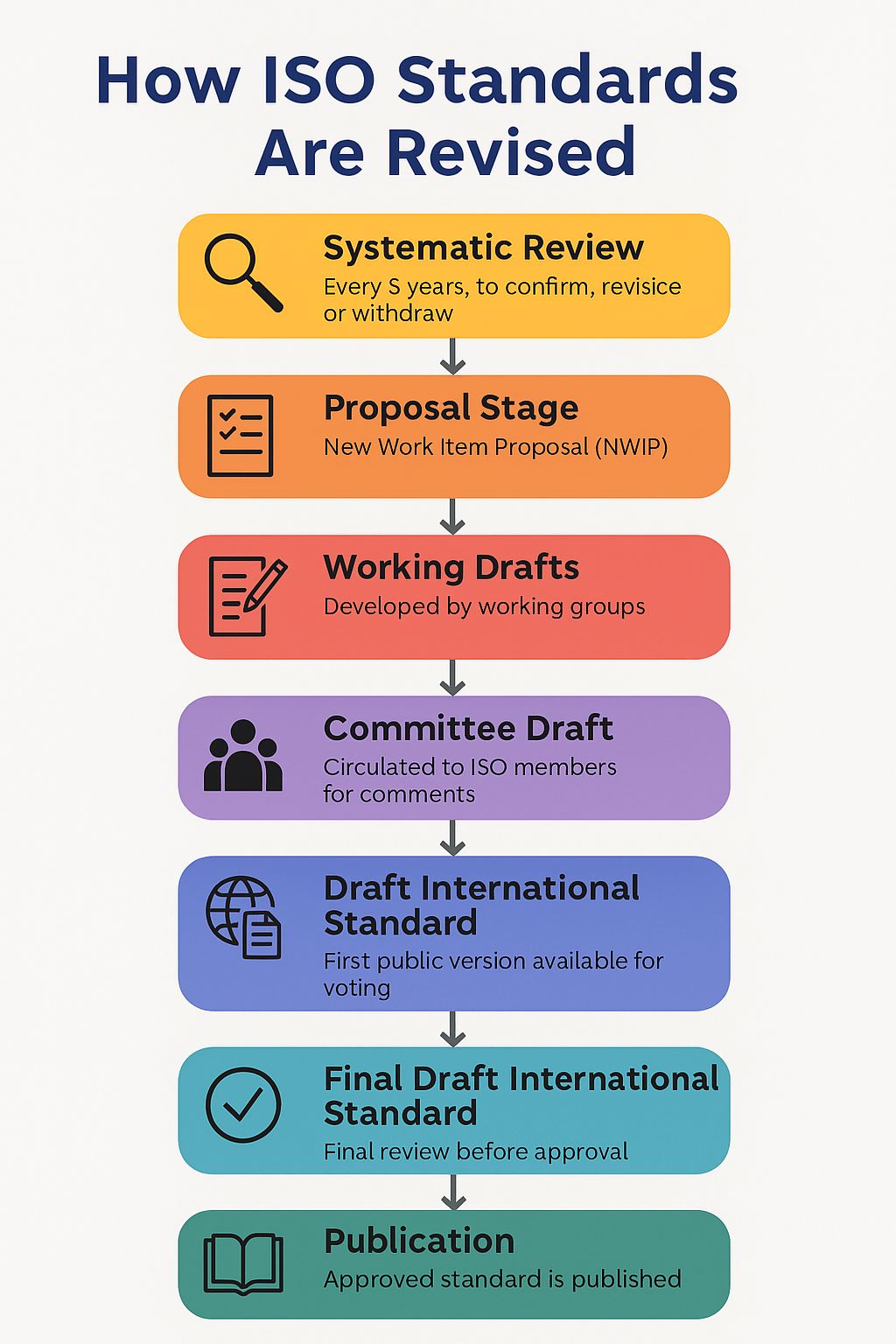
1. Systematic Review (Every 5 Years)
Every ISO standard is reviewed at least once every five years by its technical committee. The outcome can be:
- Confirm the standard remains valid
- Revise to reflect new needs
- Withdraw if it's outdated or redundant
For example, ISO 9001:2015 underwent a formal review starting in 2020, which led to the current planned update in 2026.
2. Proposal Stage (New Work Item Proposal – NWIP)
If a revision is needed, the process begins with a New Work Item Proposal, where committee members vote on whether to proceed. This ensures there’s enough global interest and commitment to support the revision effort.
3. Working Drafts (WD)
Technical experts from around the world (within ISO Technical Committees like TC 176 for quality or TC 207 for environment) form working groups to develop the Working Draft. They incorporate input from industry, regulators, and users of the standard.
4. Committee Draft (CD)
Once refined, the standard becomes a Committee Draft, circulated for comments among ISO member bodies. Feedback is collected, discussed, and integrated.
5. Draft International Standard (DIS)
This is the first public version of the revision. Countries vote on the DIS and provide final technical comments. This is often when early adopters and consultants begin preparing transition strategies.
6. Final Draft International Standard (FDIS)
The FDIS is the near-final version, shared for a last round of review and approval. It requires a 2/3 majority vote among ISO members to move forward.
7. Publication of the Revised ISO Standard
Once approved, the standard is published and replaces the prior version. Certified companies are typically given a 3-year transition period to comply with the new requirements.
🌍 Why This Matters
Revisions are not just administrative—they reflect shifts in how organizations are expected to lead, protect the environment, manage risk, and drive performance. Staying ahead of these changes is a strategic advantage.
Key Changes in the ISO 2026 Revisions
The upcoming revisions introduce several key changes that will impact how businesses approach certification. Understanding these changes is crucial for developing effective strategies that align with the new standards.
Climate Change Considerations
One of the most significant updates is the inclusion of climate change considerations across ISO 9001, 14001, and 45001. Organizations will be required to assess and address climate-related risks and opportunities, integrating these into their management systems.
Emphasis on Ethical Leadership
ISO 9001:2026 places a strong emphasis on ethical leadership. New requirements will hold leaders accountable for fostering a culture of integrity and ethical behavior. This shift reflects a growing recognition of the role leadership plays in driving sustainable business practices.
Stakeholder Engagement and Governance
The revisions also highlight the importance of stakeholder engagement and governance. Organizations will need to demonstrate how they engage with stakeholders and incorporate their input into decision-making processes. This change aims to enhance transparency and accountability. For further insights, explore how ISO 9001 training emphasizes these aspects.
“The inclusion of stakeholder engagement in ISO standards reflects a broader trend towards participatory governance in business.” – ISO Expert
These changes are not just theoretical; they require practical implementation. Organizations must adapt their systems and processes to meet these new requirements, ensuring that they remain competitive and compliant in a rapidly changing world. For a comprehensive understanding, consider exploring what ISO 9001 training teaches that certification alone can't.
Adapting Quality Management Systems
Adapting your quality management system (QMS) to align with the 2026 ISO revisions involves a strategic overhaul. It's essential to integrate the new focus areas such as climate change and ethical leadership into your existing frameworks. This isn't merely about ticking boxes; it's about fundamentally shifting how your organization views quality management.
Start by evaluating your current processes. Identify areas where climate-related risks might impact quality outcomes. For instance, supply chain disruptions due to extreme weather events could affect your product delivery timelines. Incorporate these considerations into your risk management plans to ensure resilience.
Implementing Environmental and Safety Measures
The 2026 revisions place a renewed emphasis on environmental and safety measures, especially under ISO 14001 and 45001. This means organizations must not only comply with existing regulations but also anticipate future environmental and safety challenges.
- Conduct regular environmental impact assessments to identify potential risks.
- Implement proactive safety protocols to protect workers from new hazards.
- Adopt sustainable practices, such as reducing waste and conserving resources.
By prioritizing these measures, you enhance your organization's reputation as a responsible corporate citizen. This proactive stance can also lead to cost savings, as efficient resource management often results in reduced operational expenses.
Furthermore, engaging employees in environmental and safety initiatives fosters a culture of accountability and continuous improvement. When everyone understands their role in maintaining these standards, compliance becomes a collective effort.
Enhancing Stakeholder Relations
Stakeholder engagement is now a cornerstone of ISO standards. Building strong relationships with stakeholders requires transparency, communication, and collaboration. These relationships are crucial for gathering diverse perspectives that can inform your strategic decisions.
Begin by mapping out your key stakeholders, including customers, suppliers, employees, and the community. Understand their needs and expectations, and incorporate their feedback into your decision-making processes. This approach not only builds trust but also ensures that your organization remains responsive to external changes.
Effective stakeholder engagement can be achieved through various channels:
- Regular surveys and feedback sessions to capture stakeholder insights.
- Collaborative workshops to address shared concerns and develop joint solutions.
- Transparent reporting on your organization's progress and challenges.
By actively involving stakeholders, you demonstrate a commitment to accountability and transparency. This engagement is not just beneficial for compliance; it also strengthens your organization's resilience and adaptability in an ever-changing business environment. For more insights, explore how implementing HCQMS can further enhance your strategies.
Preparing for the Transition
Preparing for the transition to the 2026 ISO standards requires careful planning and execution. It's crucial to approach this process methodically to ensure a smooth transition that aligns with the new requirements.
Conducting a Gap Analysis
A gap analysis is a critical first step in preparing for the ISO revisions. This process involves comparing your current management systems against the new standards to identify areas that need improvement.
To conduct a gap analysis:
- Review the new ISO standards and identify key changes.
- Assess your existing systems and processes to find discrepancies.
- Prioritize areas for improvement based on their impact on compliance and performance.
By understanding where your organization currently stands, you can develop a targeted action plan to address gaps and ensure readiness for the new standards.
Training and Development Programs
Training and development are essential components of a successful transition. Educating your workforce about the new ISO requirements ensures that everyone is aligned with the organization's goals and objectives. For a deeper understanding, consider exploring what ISO 9001 training teaches beyond certification.
Develop comprehensive training programs that cover key insights into implementing HCQMs:
- The key changes in the 2026 ISO revisions.
- The implications of these changes for daily operations.
- Best practices for compliance and continuous improvement.
Regular training sessions and workshops can help reinforce these concepts, making them part of your organization's culture. This investment in human capital is crucial for maintaining compliance and driving long-term success.
Besides that, encouraging a culture of learning and development empowers employees to take ownership of their roles in the transition process. This collective effort ensures that your organization is well-prepared to meet the challenges and opportunities presented by the new ISO standards.
Utilizing Consulting Services
Consulting services can be invaluable during the transition to the 2026 ISO standards. These experts bring a wealth of knowledge and experience, offering guidance and support tailored to your organization's unique needs. For more insights, explore how medtech manufacturers can navigate the transition.
Consider engaging consultants to implement and streamline your processes effectively.
- Provide insights into best practices for implementing the new standards.
- Assist with conducting gap analyses and developing action plans.
- Offer training and support to ensure a smooth transition.
By leveraging external expertise, you can streamline the transition process and avoid common pitfalls. Consultants can also help you identify opportunities for improvement that may not be immediately apparent, ensuring that your organization not only complies with the new standards but also thrives in the long run.
Opportunities and Benefits of ISO Certification
The 2026 ISO revisions present numerous opportunities for organizations to enhance their certification strategies and realize tangible benefits. By aligning with the new standards, businesses can strengthen their competitive position and drive sustainable growth.
Strengthening Corporate Credibility
ISO certification is a mark of credibility and trustworthiness. By adhering to the latest standards, organizations demonstrate their commitment to quality, environmental responsibility, and safety. This enhances their reputation among customers, partners, and regulators, leading to increased business opportunities and market share.
Aligning with Global Sustainability Goals
The focus on sustainability in the 2026 revisions aligns with global efforts to address environmental and social challenges. By integrating these considerations into their operations, organizations can contribute to a more sustainable future while reaping the benefits of improved efficiency and reduced costs.
Ultimately, the 2026 ISO revisions provide a roadmap for organizations to enhance their certification strategies and achieve long-term success. By embracing these changes and proactively preparing for the transition, businesses can position themselves as leaders in their industries and make a positive impact on the world.
Boosting Operational Efficiency
Operational efficiency is a cornerstone of successful businesses, and the 2026 ISO revisions offer a framework to enhance this aspect significantly. By aligning with the new standards, organizations can streamline their processes, reduce waste, and optimize resource utilization. For those looking to implement these changes, understanding the first steps in implementing can provide key insights and guidance.
To achieve this, businesses should focus on integrating quality, environmental, and safety considerations into every facet of their operations. This holistic approach ensures that efficiency gains are not only realized but also sustainable in the long term. For further insights, you can explore the first steps in implementing.
Moreover, the emphasis on stakeholder engagement in the new revisions provides opportunities for collaboration and innovation. By involving stakeholders in decision-making processes, organizations can identify new ways to enhance efficiency and drive continuous improvement.
“Efficiency is doing things right; effectiveness is doing the right things.” – Peter Drucker
Conclusion: Positioning for Future Success
The 2026 ISO revisions represent a significant opportunity for organizations to enhance their certification strategies and position themselves for future success. By understanding the changes and proactively preparing for the transition, businesses can not only ensure compliance but also unlock new opportunities for growth and innovation.
Summarizing Key Actions for Businesses
To successfully navigate the 2026 ISO revisions, businesses should focus on several key actions, including understanding the transition to new ISO standards and implementing necessary changes efficiently.
- Conduct a thorough gap analysis to identify areas needing improvement.
- Develop comprehensive training programs to educate employees on new standards.
- Engage stakeholders to gather insights and build strong relationships.
- Leverage consulting services for expert guidance and support.
The Importance of Proactive Preparation
Proactive preparation is essential for ensuring a smooth transition to the new ISO standards. By taking action now, organizations can avoid potential disruptions and position themselves as leaders in their industries. For example, understanding what ISO 9001 training teaches can be invaluable for companies aiming to excel in their compliance efforts.
Ultimately, the 2026 ISO revisions offer a roadmap for organizations to enhance their certification strategies and achieve long-term success. By embracing these changes and proactively preparing for the transition, businesses can position themselves as leaders in their industries and make a positive impact on the world.
Frequently Asked Questions (FAQ)
As organizations prepare for the 2026 ISO revisions, several questions commonly arise. For instance, many wonder how MedTech manufacturers can navigate the transition from existing standards to the new ISO requirements. Here are answers to some of the most frequently asked questions:
What are the major changes in the 2026 ISO revisions?
The major changes in the 2026 ISO revisions include a focus on climate change considerations, enhanced ethical leadership requirements, and increased emphasis on stakeholder engagement and governance. These changes are designed to align ISO standards with contemporary global challenges.
How will these changes affect existing ISO certifications?
Existing ISO certifications will need to be updated to comply with the new standards. Organizations will need to conduct a gap analysis and make necessary adjustments to their management systems to ensure alignment with the revised requirements.
Additionally, businesses may need to undergo re-certification to demonstrate compliance with the updated standards. This process involves a thorough review of existing systems and practices to ensure they meet the new requirements.
What steps should businesses take to align with the new standards?
To align with the new standards, businesses should start by conducting a gap analysis to identify areas needing improvement. They should then develop a comprehensive action plan to address these gaps, including updating processes, training employees, and engaging stakeholders.
Organizations should also consider leveraging consulting services to provide expert guidance and support during the transition process. This approach ensures a smooth and successful transition to the new standards.
Why is stakeholder engagement emphasized in the new revisions?
Stakeholder engagement is emphasized in the new revisions because it enhances transparency, accountability, and collaboration. By involving stakeholders in decision-making processes, organizations can gather diverse perspectives, build trust, and drive continuous improvement.
This approach aligns with global trends towards participatory governance and ensures that organizations remain responsive to external changes and challenges. For more insights, consider exploring the critical role of continuous improvement in organizational strategies.
How can consulting services assist in the transition?
Consulting services can provide valuable support during the transition to the 2026 ISO standards. These experts offer insights into best practices, assist with conducting gap analyses, and help develop action plans to ensure compliance with the new requirements. For more information on how these services can be beneficial, read about navigating the transition in different industries.
Consultants can also provide training and support to educate employees about the new standards and foster a culture of continuous improvement. By leveraging external expertise, organizations can streamline the transition process and achieve long-term success.
As organizations strive to maintain their competitive edge, understanding the nuances of ISO certification becomes crucial. The upcoming revisions in 2026 are expected to bring significant changes to the landscape. For those in the medical technology sector, it's essential to know how to navigate the transition from QSIT to ISO 13485:2016. Staying informed and adapting to these changes can make a substantial difference in ensuring compliance and achieving operational excellence.