
- Systems thinking empowers professionals to tackle complex problems with a holistic perspective.
- Gifts that promote systems thinking can significantly enhance strategic planning and decision-making skills.
- Encouraging cross-functional collaboration is a key benefit of systems thinking in professional settings.
- Systems thinking supports continuous improvement by fostering a culture of feedback and iteration.
- Investing in systems thinking tools can drive innovation and adaptability in dynamic business environments.
The Gifts of Systems Thinking: Transforming Professionals and Organizations
In an era of complexity and rapid change, professionals who embrace Systems Thinking gain a significant advantage. Whether in business, leadership, or quality and/or environmental management, Systems Thinking provides a structured yet dynamic approach to problem-solving, decision-making, and continuous improvement. At its core, it allows individuals to see the bigger picture, understand interdependencies, and anticipate long-term consequences.
Systems thinking is a powerful approach that professionals can use to understand and manage complex environments. This method is not just about solving problems; it’s about seeing the bigger picture and understanding how different parts of a system interact. For professionals, embracing systems thinking can lead to transformative growth and development.
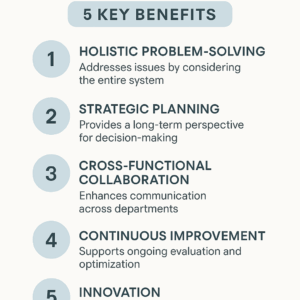
Key Benefits of Systems Thinking for Professional Growth
One of the primary benefits of systems thinking is its ability to enhance professional growth. By adopting this mindset, professionals can develop a deeper understanding of how their actions impact the larger system. This holistic view encourages more informed decision-making and problem-solving.
What is Systems Thinking?
Systems Thinking is a holistic approach to analyzing how different parts of a system interact and influence one another. Unlike linear thinking, which focuses on cause-and-effect relationships in isolation, Systems Thinking recognizes that challenges are interconnected and that sustainable solutions require an understanding of the entire system.
For professionals, this perspective shifts the focus from short-term fixes to long-term effectiveness. It fosters an appreciation for patterns, structures, and feedback loops, allowing for more informed decision-making and strategic planning.
Transformative Power of Systems Thinking Gifts
Gifts that promote systems thinking can be transformative for professionals. These gifts often include tools, books, or workshops designed to enhance a person’s ability to think systemically. They help individuals move beyond linear thinking, enabling them to identify patterns and connections that are not immediately obvious.
For instance, a book on systems thinking can provide valuable insights into how complex systems work. It can introduce concepts such as feedback loops and leverage points, which are crucial for understanding and managing change. Similarly, a workshop focused on systems thinking can provide hands-on experience in applying these concepts to real-world problems.
Unique Value of Systems Thinking Tools
Systems thinking tools offer unique value by providing frameworks and methodologies that professionals can use to analyze and understand complex systems. Tools like causal loop diagrams and stock and flow diagrams allow individuals to map out the relationships and interactions within a system. These visual representations can make it easier to identify potential problems and solutions.
Importance in Professional Development
Incorporating systems thinking into professional development is crucial because it equips individuals with the skills needed to navigate today’s complex business environments. Professionals who can think systemically are better positioned to lead change and drive innovation. They can see beyond immediate challenges and recognize the broader implications of their decisions.
Most importantly, systems thinking fosters a mindset of continuous learning and improvement. It encourages professionals to question assumptions, explore new possibilities, and seek out diverse perspectives. This openness to learning is essential for personal and professional growth.
Encouraging Holistic Problem Solving
Systems thinking encourages holistic problem-solving by focusing on the interconnectedness of different elements within a system. Instead of addressing symptoms, professionals learn to identify root causes and develop comprehensive solutions that consider the system as a whole.
Understanding Complex Systems
Understanding complex systems is a critical component of systems thinking. Professionals need to recognize that systems are made up of multiple interconnected parts that influence one another. By understanding these connections, they can better predict the outcomes of their actions and make more informed decisions.
Integrating Cross-Functional Solutions
Integrating cross-functional solutions is another key aspect of systems thinking. By breaking down silos and encouraging collaboration across different departments, professionals can develop solutions that address the needs of the entire organization. This approach leads to more effective and sustainable outcomes, as highlighted in this management system integration guide.
Identifying Key Leverage Points
Identifying key leverage points is a cornerstone of systems thinking. Leverage points are places within a system where a small change can lead to significant improvements. By focusing on these points, professionals can maximize their impact with minimal effort.
For example, a company struggling with low employee morale might identify communication as a leverage point. By improving internal communication channels, the company can enhance morale, increase productivity, and reduce turnover, all with a single strategic initiative.
Finding these leverage points requires a deep understanding of the system’s dynamics. It involves mapping out the relationships and feedback loops that drive the system’s behavior. Once identified, professionals can prioritize actions that will yield the greatest benefits, similar to implementing a competitive advantage management system.
Therefore, leveraging these points effectively can lead to exponential improvements and sustainable growth. It’s about working smarter, not harder, to achieve desired outcomes.
The Gifts of Systems Thinking for Professionals
- Enhanced Problem-Solving
Systems Thinking helps professionals break down complex issues into manageable components while understanding their broader impact. By identifying root causes rather than treating symptoms, organizations can implement solutions that drive meaningful change. - Improved Decision-Making
Decisions made in silos often lead to unintended consequences. Systems Thinking encourages professionals to consider how choices affect the organization as a whole, leading to more balanced and sustainable outcomes. - Greater Adaptability
In today’s fast-changing world, adaptability is a valuable skill. Systems Thinking equips professionals with the ability to navigate uncertainty, anticipate challenges, and adjust strategies based on systemic feedback. - Stronger Collaboration
Organizations thrive when departments and teams work together effectively. Systems Thinking promotes cross-functional collaboration by helping professionals understand how their roles contribute to the overall success of a business. - Sustainable Continuous Improvement
Continuous improvement is the foundation of excellence. Systems Thinking aligns with methodologies like ISO Standards by ensuring that improvements are systemic rather than reactive. This leads to lasting enhancements in processes, efficiency, and customer satisfaction.
Enhancing Communication and Collaboration
Enhancing communication and collaboration is vital for any organization aiming to succeed in today’s fast-paced environment. Systems thinking promotes a culture where open dialogue and teamwork are the norm, breaking down barriers and fostering innovation. For organizations looking to integrate these principles, exploring management system integration can be a valuable step towards achieving a competitive advantage.
When teams communicate effectively, they can share insights and perspectives that lead to better decision-making. Collaboration allows for the pooling of resources and talents, creating synergies that drive success. Systems thinking encourages professionals to view communication as an ongoing process that requires constant attention and improvement.
Improving Team Dynamics
Improving team dynamics is essential for building cohesive and high-performing teams. Systems thinking provides tools and frameworks that help teams understand their roles and responsibilities within the larger system. It encourages individuals to consider how their actions impact others and the organization as a whole.
How Systems Thinking Strengthens ISO Standards Implementation
For organizations implementing ISO 9001, ISO 14001, or other management system standards, Systems Thinking enhances the ability to integrate quality, environmental, and business objectives seamlessly. It reinforces the process approach, risk-based thinking, and leadership commitment—key principles that drive sustained success. See any of OUR ISO Trainings ex. Executive Briefs or Overviews

By embedding Systems Thinking into ISO frameworks, organizations move beyond compliance and embrace a culture of proactive improvement. This ensures that quality, sustainability, and operational excellence become deeply ingrained in daily business practices. Professionals that can think in this way make great internal auditors
Facilitating Interdepartmental Engagement
Facilitating interdepartmental engagement is another benefit of systems thinking. By promoting cross-functional collaboration, organizations can break down silos and create a more integrated and agile operation. This approach ensures that all departments are aligned with the organization’s goals and working towards common objectives.
Consider a company that integrates its marketing and sales teams to improve customer experience. By aligning their efforts, they can create more cohesive campaigns and increase customer satisfaction, leading to higher sales and brand loyalty.
This type of engagement encourages transparency and trust, which are essential for effective collaboration. It also fosters a sense of shared responsibility, motivating teams to work together towards achieving the organization’s mission. To learn more about how systems thinking in business can enhance workplace dynamics, explore this insightful resource.
Besides that, interdepartmental engagement can lead to the discovery of new opportunities and solutions that might not have been apparent within individual departments. It opens up new channels for innovation and growth, driving the organization forward. For instance, implementing a quality management system can enhance overall effectiveness.
Driving Innovation and Adaptability
Driving innovation and adaptability is crucial in today’s ever-changing business landscape. Systems thinking empowers professionals to embrace change and turn challenges into opportunities. By fostering a culture of creativity and flexibility, organizations can remain competitive and thrive in uncertain environments.
Fostering a Culture of Creativity
Fostering a culture of creativity involves encouraging experimentation and embracing diverse perspectives. Systems thinking encourages professionals to challenge the status quo and explore new ways of doing things. It values curiosity and open-mindedness, which are essential for driving innovation.
Supporting Agile Business Practices
Supporting agile business practices is another key benefit of systems thinking. Agile methodologies focus on iterative development and continuous improvement, which align perfectly with the principles of systems thinking. By adopting an agile mindset, organizations can respond quickly to changes and deliver value to their customers more effectively.
Facilitating Continuous Improvement
Facilitating continuous improvement is a fundamental aspect of systems thinking. It involves regularly assessing performance metrics and seeking feedback to identify areas for growth. By fostering a culture of continuous learning, organizations can adapt to changes and improve their processes over time.
In summary, systems thinking offers numerous benefits for professionals seeking to enhance their skills and drive organizational success. By promoting holistic problem-solving, strategic thinking, and continuous improvement, systems thinking empowers individuals to navigate complex environments and achieve their goals.
Assessing Performance Metrics
Assessing performance metrics is a crucial part of facilitating continuous improvement within an organization. Systems thinking provides a framework for evaluating these metrics by considering the broader system in which they operate. This approach ensures that performance assessments are comprehensive and account for the various factors influencing outcomes.
By regularly reviewing key performance indicators (KPIs), professionals can identify trends and patterns that may indicate underlying issues or opportunities for improvement. This ongoing analysis allows for proactive adjustments and the refinement of strategies to enhance performance.
Encouraging Feedback and Iteration
Encouraging feedback and iteration is essential for creating a culture of continuous improvement. Systems thinking emphasizes the importance of feedback loops, which provide valuable insights into how changes impact the system. By fostering open communication and encouraging input from all levels of the organization, professionals can gather diverse perspectives and identify areas for growth.
Iteration, or the process of making incremental improvements, is a key component of systems thinking. By continuously refining processes and strategies, organizations can adapt to changing conditions and remain competitive. This iterative approach allows for ongoing learning and development, ensuring that the organization remains agile and responsive to new challenges.
Final Thoughts
Embracing Systems Thinking is a gift that professionals and organizations can leverage to drive excellence. It provides a mindset that fosters innovation, resilience, and long-term growth. Whether you are a business leader, quality manager, or an entrepreneur, adopting Systems Thinking will empower you to make smarter decisions, enhance collaboration, and build a sustainable future.
As you navigate the complexities of your profession, ask yourself: How can Systems Thinking help you see opportunities where others see obstacles? The answer could redefine the way you approach challenges and lead to remarkable success.
Let’s talk systems—because when we think holistically, we build stronger, smarter, and more sustainable organizations.
Frequently Asked Questions (FAQ)
Systems thinking can be a complex topic, and it’s natural to have questions about how it applies to professional development. Here are some frequently asked questions to help clarify its benefits and applications. For more insights, explore how management system integration can provide a competitive advantage.
What is systems thinking, and why is it important?
Systems thinking is a holistic approach to understanding complex systems and their interactions. It is important because it enables professionals to see the bigger picture and make informed decisions that consider the entire system rather than isolated parts. This perspective leads to more effective problem-solving and strategic planning.
How does systems thinking improve problem-solving skills?
Systems thinking improves problem-solving skills by encouraging individuals to identify root causes and consider the interconnectedness of different elements within a system. This approach leads to comprehensive solutions that address the underlying issues rather than just the symptoms, resulting in more sustainable outcomes.
Can systems thinking be applied to any profession?
Yes, systems thinking can be applied to any profession. Whether you’re in business, healthcare, education, or another field, systems thinking provides valuable insights into how complex systems operate. By adopting this mindset, professionals can enhance their decision-making, collaboration, and innovation skills. For instance, understanding the impact of a quality management system in healthcare can significantly improve patient care and streamline practices.
For example, a teacher might use systems thinking to develop a curriculum that considers the diverse needs and learning styles of students, creating a more inclusive and effective educational environment.
What makes systems thinking gifts unique and impactful?
Systems thinking gifts are unique and impactful because they provide tools and resources that enhance a person’s ability to think systemically. These gifts often include books, workshops, or software that introduce concepts such as feedback loops and leverage points, empowering individuals to understand and manage complex systems effectively. For example, understanding how to build and optimize systems can be a crucial part of this learning process.
Top Recommended Books on Systems Thinking
1. Thinking in Systems: A Primer by Donella Meadows
Widely considered the foundational text in systems thinking, this book introduces key concepts like feedback loops, system boundaries, and leverage points. Meadows’ writing is clear and accessible, making it ideal for both beginners and seasoned professionals.
2. Systems Thinking Made Simple: New Hope for Solving Wicked Problems by Derek & Laura Cabrera
This book presents the DSRP framework—Distinctions, Systems, Relationships, and Perspectives—as a practical method for applying systems thinking in real-world contexts. It’s especially useful for educators, consultants, and organizational leaders.
3. The Systems Thinking Visionary by Mike Walker
This newer release blends visionary thinking with execution strategies. It’s designed for professionals who feel torn between being “idea people” and “implementers,” and offers tools to unify both strengths through elegant systems.
Why These Stand Out
- Meadows offers timeless principles and clarity.
- Cabrera & Cabrera provide a structured, actionable framework.
- Walker brings a modern, entrepreneurial lens to systems thinking.
How can professionals start learning systems thinking?
Professionals can start learning systems thinking by exploring resources such as books, online courses, and workshops. Engaging with these materials provides a solid foundation in systems thinking concepts and methodologies. Additionally, practicing systems thinking in everyday problem-solving and decision-making helps reinforce these skills and integrate them into professional practice.
One practical step is to begin mapping out the systems you interact with regularly. Identify the key components, relationships, and feedback loops that influence the system’s behavior. This exercise helps develop a deeper understanding of how systems operate and provides valuable insights for applying systems thinking in your work.
Systems thinking is a holistic approach to analysis that focuses on the way that a system’s constituent parts interrelate and how systems work over time and within the context of larger systems. This approach is particularly beneficial for professionals looking to gain a competitive edge. By integrating systems thinking into their strategies, organizations can enhance their effectiveness and achieve sustainable success. For instance, understanding how to manage and integrate various components can provide a competitive advantage in today’s complex business environment.
