Executive Summary
Transform your business operations with a perpetual calendar system that aligns with ISO standards. This comprehensive guide shows you how to create a sustainable, long-term planning framework that drives continuous improvement and operational excellence.
The Power of Perpetual Calendar Planning
A perpetual calendar is more than just a scheduling tool—it's your organization's strategic compass. Unlike traditional calendars that expire yearly, a perpetual calendar creates an enduring framework that synchronizes your daily operations with long-term objectives. By incorporating ISO standards, this system becomes even more powerful, ensuring your business maintains international quality benchmarks while driving sustainable growth.
Building Your Strategic Framework
Understanding the Fundamentals
Your perpetual calendar should capture three key elements:
- Critical business cycles and seasonal patterns
- ISO compliance requirements and deadlines
- Strategic milestones and growth objectives
Essential Components to Include
Every effective perpetual calendar system should track:
- Internal and external ISO audits
- Quarterly management reviews
- Annual training requirements
- Monthly performance evaluations
- Weekly operational checkpoints
Maximizing ISO Integration
Aligning with ISO Standards
Incorporating ISO standards into your perpetual calendar creates a robust quality management framework. This integration helps:
- Streamline compliance processes
- Reduce operational inefficiencies
- Enhance quality control measures
- Foster continuous improvement
Strategic Implementation Steps
- Map your current business processes
- Identify critical ISO requirements
- Schedule regular compliance reviews
- Plan for documentation updates
- Set automated reminders for key deadlines
Maintaining Excellence Through Continuous Improvement
Building a Culture of Quality
Success with your perpetual calendar requires:
- Regular team engagement and feedback
- Consistent monitoring and updates
- Proactive adjustment to changing requirements
- Celebration of achievements and milestones
Best Practices for Long-term Success
- Review and update your calendar quarterly
- Document process improvements
- Train team members on system usage
- Monitor and measure effectiveness
- Adjust based on performance metrics
Practical Implementation Guide
Getting Started
- Assess your current planning system
- Define key business cycles
- Map ISO requirements to your calendar
- Set up automation and reminders
- Train your team on the new system
Common Challenges and Solutions
- Challenge: Maintaining consistency Solution: Implement automated reminders and regular review cycles
- Challenge: Team adoption Solution: Provide comprehensive training and demonstrate clear benefits
- Challenge: Keeping up with ISO updates Solution: Schedule regular standard review sessions
Measuring Success
Key Performance Indicators
Monitor these metrics to gauge effectiveness:
- Compliance rate with ISO requirements
- Number of missed deadlines
- Process efficiency improvements
- Team productivity levels
- Customer satisfaction scores
Looking Ahead
Future-Proofing Your System
Your perpetual calendar should evolve with your business. Plan for:
- Regular system updates
- Integration of new ISO standards
- Expansion of tracking capabilities
- Enhanced automation features
Resources and Tools
- Free downloadable Excel calendar template
- ISO standard guidelines
- Implementation checklists
- Training materials
- Support documentation
Conclusion
A well-implemented perpetual calendar system, aligned with ISO standards, becomes the backbone of your business operations. It transforms time management from a daily challenge into a strategic advantage, ensuring your organization maintains excellence while driving continuous improvement.
Ready to transform your business planning? Download our free Excel calendar template and start your journey toward operational excellence today.
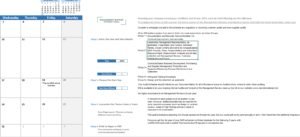
See how we have set up priorities by subjects.
MSI's ISO 9001 Perpetual Calendar
Download your Free editable Excel Calendar
Unlocking Productivity: Leveraging Perpetual Calendars
Now, let's talk about making every second count. You see, time management isn't just about filling your day with tasks; it's about filling your day with the right tasks. And that's where a perpetual calendar becomes a game-changer.
Improving Time Management with Recurring Tasks
Here's the thing: there are tasks that happen over and over again. Whether it's monthly KPI reviews, invoicing, weekly inventory checks, or daily social media posts, these recurring tasks are the rhythm of your business. By plotting them out on your perpetual calendar, you ensure they're done on time, every time. It's like setting an internal clock for your business that keeps ticking with precision.
Automating Scheduling to Avoid Oversights
Because let's be real, we're only human. We forget, we overlook, we miss things. But guess what? Your perpetual calendar doesn't. By setting up automated reminders for important tasks, you're creating a safety net. This way, even if something slips your mind, it won't slip through the cracks of your business operations.
Maximizing Benefits with ISO-Centric Calendar Management
When you start aligning your perpetual calendar with ISO standards, you're not just planning; you're elevating your business to a whole new level of organization and credibility. ISO standards are internationally recognized for a reason—they work.
Think of ISO as a stamp of excellence. It's proof that your business is operating at the highest standards of quality and efficiency. By using these standards as the backbone of your perpetual calendar, you're setting the bar high and ensuring your business doesn't just meet expectations but exceeds them.
And this isn't just about impressing clients or customers; it's about creating a culture of excellence within your team. When everyone is working towards ISO standards, they're working towards greatness. It's that simple.
Ensuring Compliance with Advanced Planning
One of the biggest benefits of marrying your perpetual calendar with ISO standards is compliance. No more scrambling at the last minute to meet audit deadlines or regulatory requirements. With advanced planning, you're always a step ahead, cool as a cucumber when those deadlines roll around because you've prepared for them all year long.
Using ISO Guidelines to Strengthen Business Planning
ISO guidelines are more than just rules; they're the building blocks for strong business planning. They encourage you to look at your processes, identify potential improvements, and implement changes that lead to better performance. It's about turning good into great and then into exceptional.
Staying Ahead: Anticipating Changes and Adapting Strategies
But here's the kicker: the business world doesn't stand still, and neither should your perpetual calendar. It's not about setting it and forgetting it; it's about staying agile, ready to pivot when necessary.
Change is the only constant, and your calendar should reflect that. It should be a living document, one that evolves with your business and the world around it. That's how you stay ahead of the curve, not just caught up to it.
Keeping Abreast of ISO Updates
ISO standards aren't static; they get updated to reflect the latest in industry best practices and regulatory requirements. Therefore, part of your perpetual planning is to keep an eye on these changes. When ISO updates its guidelines, your calendar should update too. This proactive approach ensures that you're always compliant and competitive.
And it's not just about the big changes; it's about the small tweaks too. Sometimes, the smallest adjustment can lead to the biggest improvement in how you operate. So stay curious, stay informed, and stay on top of those ISO updates.
Flexibility and Scalability in Planning
Remember, your perpetual calendar is not set in stone. It's flexible, scalable, and adaptable. As your business grows, your calendar should grow with it. New goals, new milestones, new tasks—they all find a home in your evolving calendar.
It's about building a framework that supports growth, not one that confines you. So, as you scale, your calendar scales with you, ensuring that no matter how big your business gets, you're always organized and in control.
Tangible Results: A Closer Look at Successful Implementations
Now, let's talk results because that's what really matters at the end of the day. How has this approach worked for others? Let's take a look at some examples.
Case Study Overviews
We have seen customers implement a perpetual calendar aligned with ISO 9001 standards. The result? A 20% reduction in operational delays and a significant boost in customer satisfaction. Another example is a company that used its perpetual calendar to streamline its environmental compliance processes, leading to a 15% decrease in waste.
Lessons Learned from Perpetual Calendar Usage
These companies learned that the key to perpetual calendar success is consistency and commitment. It's not a one-time effort; it's a continuous one. And it pays off in the form of smoother operations, happier customers, and a more engaged team. Solidifies the yearly routine and ensures no cramming in during high vacation times.
They also learned that flexibility is critical. When unexpected challenges arose, they were able to adjust their calendars quickly, ensuring that their business didn't just survive but thrived.
Perpetuating Excellence: Continuous Improvement with ISO
Finally, let's wrap up with the idea of continuous improvement. ISO isn't just about reaching a standard; it's about constantly pushing past it. By using a perpetual calendar, you're committing to ongoing excellence, to never settling for “good enough.”
It's about fostering a culture where improvement is the norm, where every day is an opportunity to do better than the last. And that's a culture that leads to success, not just in the short term but for years to come.
Maintaining Momentum and Encouraging Team Accountability
Continuous improvement with ISO is all about maintaining momentum and encouraging team accountability. It's about setting up systems that make it easy for your team to do the right thing. This means clear, accessible documentation of processes, regular training sessions, and an open-door policy for feedback and suggestions. When everyone knows what's expected and feels they have a stake in the outcome, you create a proactive workforce that takes ownership of their roles.
Building a Culture of Ongoing Quality Enhancements
To build a culture of ongoing quality enhancements, it's essential to celebrate the small wins along the way. Recognize the efforts of your team when they meet targets, improve processes, or come up with innovative solutions. This not only boosts morale but also reinforces the behavior you want to see. A culture that values continuous improvement is one that's always moving forward, always getting better.
- Encourage regular feedback from all team members.
- Set clear, measurable goals linked to ISO standards.
- Recognize and reward improvements and achievements.
- Conduct regular training and development sessions.
- Review and update your perpetual calendar regularly.
By embedding these practices into your business operations, you're not just ticking boxes for ISO certification; you're crafting an environment where excellence is the norm.
Frequently Asked Questions
How Does a Perpetual Calendar Differ from a Regular Calendar?
A perpetual calendar is designed to be used year after year, without needing replacement. Unlike a regular calendar, which is specific to a single year, a perpetual calendar helps you plan for recurring events and long-term strategies. It's the ultimate tool for ensuring consistency and reliability in your business operations.
A regular calendar might tell you when your next meeting is, but a perpetual calendar will ensure that meeting is part of a bigger picture – driving you towards your goals.
Can Small Businesses Benefit from ISO Certifications?
Absolutely! ISO certifications are not reserved for the big players. They are a mark of quality that customers trust, no matter the size of your business. Small businesses, in particular, can stand out by demonstrating their commitment to international standards. It's a powerful way to build credibility and open doors to new markets and opportunities.
What Are Some Common Pitfalls in Business Planning Without Perpetual Calendars?
Without a perpetual calendar, businesses can fall into the trap of short-sightedness and disorganization. Common pitfalls include:
- Missed deadlines due to lack of long-term visibility.
- Inefficient resource allocation, as future needs are not anticipated.
- Increased stress and reduced productivity, as teams scramble to meet unexpected demands.
A perpetual calendar helps avoid these issues by providing a clear, long-term view of your business activities.
How Often Should a Perpetual Calendar be Reviewed?
Your perpetual calendar should be a living document, reviewed regularly. At a minimum, revisit it quarterly to ensure it aligns with your business objectives and any changes in the market or industry standards. This regular review helps you stay agile and responsive to the needs of your business.
What is the First Step in Creating a Perpetual Calendar for My Business?
The first step is to outline your business's key recurring activities and long-term goals. Start by mapping out the tasks that happen daily, weekly, monthly, and yearly. Then, integrate your strategic objectives, ensuring that each task or event on your calendar serves a purpose in reaching those goals. This foundational work sets the stage for a perpetual calendar that truly drives your business forward.