Key Takeaways
- Systems training boosts productivity, leading to a 24% higher profit margin for companies that invest in it.
- Identifying key skills and competencies is crucial for effective systems training.
- Interactive and hands-on learning approaches enhance the training experience.
- Conducting a needs analysis helps tailor training programs to specific organizational goals.
- Measuring training effectiveness ensures continuous improvement and relevance.
Unlock Your Potential: Systems Training for Professional Growth
Understanding Systems Training
Systems training refers to structured programs designed to enhance the knowledge, skills, and abilities of individuals within an organization. These programs are crafted with the goal of equipping employees with the tools they need to excel in their current roles and grow in their careers. By focusing on specific systems, such as software, processes, or methodologies, systems training ensures that employees can effectively perform their job functions and contribute to the organization’s success. Be a leader in acquiring and sharing knowledge.
Think of systems training as a way to bridge the gap between where you are now and where you want to be professionally. It empowers you to handle new challenges, adapt to changes, and stay competitive in your field. Besides that, it fosters a culture of continuous learning and improvement within the organization. Internal issues are factors that exist within the organization itself that can affect the organization’s ability to achieve sustained success by increasing levels of competence and organizational knowledge.
The Role of Systems Training in Professional Development
Systems training plays a pivotal role in professional development by providing the foundation for career growth. It helps employees acquire new skills, stay updated with industry trends, and improve their job performance. Most importantly, it prepares them for future roles and responsibilities, paving the way for promotions and career advancements.
For example, a software engineer who undergoes systems training on the latest programming languages and tools will be better equipped to handle complex projects and lead a team of developers. This not only enhances their job performance but also opens up new career opportunities within the organization.
Core Components of Effective Systems Training
Identifying Key Skills and Competencies
The first step in designing an effective systems training program is identifying the key skills and competencies required for the job. This involves conducting a thorough analysis of the job roles and responsibilities, as well as understanding the specific needs of the organization.
For instance, in the IT industry, key skills may include proficiency in programming languages, knowledge of cybersecurity protocols, and expertise in cloud computing. By identifying these skills, organizations can create targeted training programs that address specific skill gaps and enhance overall job performance.
Tools and Technologies for Systems Training
Effective systems training relies on the use of appropriate tools and technologies to deliver the training content. These can include learning management systems (LMS), online courses, simulation software, and interactive training modules. See our Online Courses

An LMS, for example, allows organizations to manage and track employee training progress, deliver online courses, and provide access to a wide range of training resources. Simulation software, on the other hand, offers a hands-on learning experience by allowing employees to practice real-world scenarios in a controlled environment.
Interactive and Hands-On Learning Approaches
Interactive and hands-on learning approaches are essential for effective systems training. These methods engage employees in the learning process, making it more enjoyable and effective. Examples include workshops, role-playing exercises, and group projects.
For example, a workshop on project management can involve participants working in teams to plan and execute a mock project. This hands-on experience helps them understand the practical aspects of project management and develop the necessary skills to manage real projects effectively. For more insights on integrated process management strategies, visit our detailed guide.
Strategies to Implement Systems Training
Conducting Needs Analysis
Conducting a needs analysis is the first step in implementing a systems training program. This involves assessing the current skills and competencies of employees, identifying skill gaps, and understanding the specific training needs of the organization.
By conducting a needs analysis, organizations can ensure that the training programs are aligned with their strategic goals and address the specific needs of their employees. This not only enhances the effectiveness of the training but also ensures that the training investments yield the desired results.
Customizing Training Programs
Customizing training programs to meet the specific needs of the organization and its employees is crucial for their success. This involves tailoring the training content, methods, and delivery formats to address the unique requirements of the organization.
For example, a manufacturing company may require training programs that focus on lean manufacturing principles, quality control, and safety protocols. By customizing the training programs to address these specific needs, the organization can ensure that employees acquire the necessary skills and knowledge to perform their jobs effectively. Learn how to transform your internal audit program to drive organizational success.
Measuring training effectiveness is essential to ensure continuous improvement and relevance. It involves evaluating the impact of the training on employees’ performance and identifying areas for improvement. This can be done through various methods, such as pre- and post-training assessments, feedback surveys, and performance reviews.
For example, a company can conduct pre- and post-training assessments to measure the improvement in employees’ skills and knowledge. Feedback surveys can provide insights into the employees’ training experience and highlight areas that need enhancement. Performance reviews can help assess the long-term impact of the training on employees’ job performance and career growth.
Benefits of Systems Training for Career Growth
Enhancing Job Performance
Systems training significantly enhances job performance by equipping employees with the necessary skills and knowledge to perform their tasks efficiently. When employees are well-trained, they can handle their responsibilities more effectively, leading to increased productivity and better job satisfaction. For instance, integrated process management strategies can streamline operations and improve overall performance.
For instance, a sales team that undergoes training on the latest customer relationship management (CRM) software will be able to manage customer interactions more effectively, track sales activities, and close deals faster. This not only improves their job performance but also contributes to the overall success of the organization.
“Companies that offer comprehensive training programs have a 24% higher profit margin compared to those that spend less on training.” – American Society for Training and Development (ASTD)
Boosting Career Opportunities
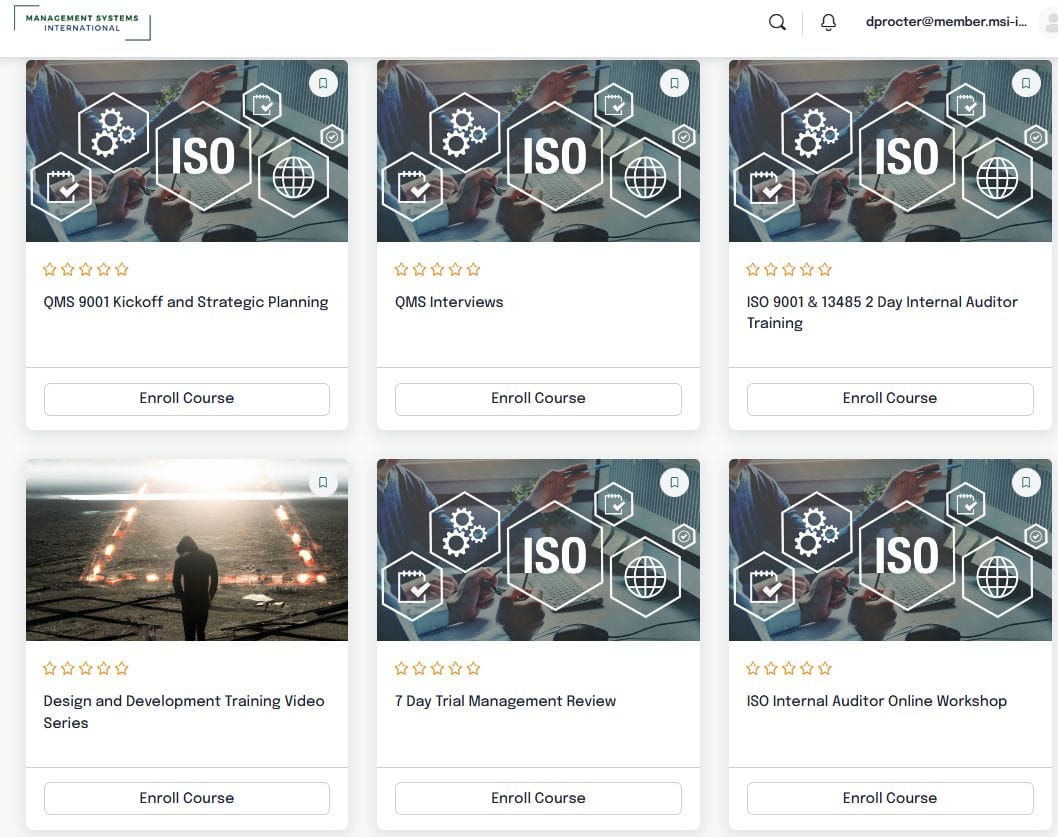
Systems training opens up new career opportunities for employees by enhancing their skill sets and making them more valuable to the organization. Employees who undergo continuous training are better prepared for higher-level positions and are more likely to be considered for promotions. See our upcoming courses to register for. We also just added Executive Brief Overviews for ISO 9001 and 14001.
For example, an employee who receives training in leadership and management skills will be better equipped to take on a managerial role within the organization. This not only benefits the employee by advancing their career but also benefits the organization by having a pool of well-trained leaders ready to take on new challenges.
Fostering Innovation and Adaptability
Systems training fosters innovation and adaptability by encouraging employees to think creatively and embrace new technologies and methodologies. In today’s fast-paced business environment, the ability to innovate and adapt is crucial for success. Top management should recognize knowledge as an intellectual asset and manage it as an essential element of the organization’s sustained success.
When defining the approach to identify, maintain, and protect knowledge, the organization should establish processes to address the following:
a) Lessons learned from both failures and successful projects;
b) The explicit and tacit knowledge within the organization, including the expertise, insights, and experiences of its people;
c) Identifying the need to acquire knowledge from relevant stakeholders as part of the organization’s strategy;
d) Ensuring the effective distribution and comprehension of information throughout the entire life cycle of the organization’s products and services;
e) Managing the documentation and its application;
f) Overseeing the management of intellectual property.
By providing employees with the necessary training, organizations can ensure that their workforce is capable of adapting to changes and coming up with innovative solutions to problems. Determining when this knowledge and technology needs to be available and how to apply it within the organization and should be developed internally or acquired externally. This not only enhances the organization’s competitiveness but also creates a culture of continuous improvement and growth.
- Encourages creative problem-solving
- Helps employees stay updated with industry trends
- Promotes a culture of continuous learning and improvement
Success Stories: Real-World Applications
Case Study: Systems Training in IT
In the IT industry, systems training plays a crucial role in keeping employees updated with the latest technologies and methodologies. One notable example is a leading tech company that implemented a comprehensive systems training program for its software development team.
The training program focused on the latest programming languages, software development frameworks, and cybersecurity protocols. As a result, the team was able to develop more secure and efficient software solutions, leading to increased customer satisfaction and a significant boost in the company’s revenue.
- Enhanced software development skills
- Improved cybersecurity measures
- Increased customer satisfaction and revenue
Case Study: Systems Training in Healthcare
In the healthcare industry, systems training is essential for ensuring that medical professionals are equipped with the latest knowledge and skills to provide high-quality care. A prominent hospital implemented a systems training program for its nursing staff, focusing on the latest patient care protocols and medical technologies.
The training program included hands-on workshops, simulation exercises, and online courses. As a result, the nursing staff was able to provide more effective and efficient patient care, leading to improved patient outcomes and higher patient satisfaction scores.
Case Study: Systems Training in Manufacturing
In the manufacturing industry, systems training helps employees stay updated with the latest production techniques and safety protocols. A leading manufacturing company implemented a systems training program for its production team, focusing on lean manufacturing principles, quality control, and workplace safety.
The training program included classroom instruction, on-the-job training, and hands-on workshops. As a result, the production team was able to reduce waste, improve product quality, and enhance workplace safety, leading to increased efficiency and profitability for the company.
Practical Tips for Getting Started
Choosing the Right Training Program
Choosing the right training program is crucial for the success of systems training. It involves selecting a program that aligns with the organization’s strategic goals and addresses the specific needs of the employees. Here are some tips for choosing the right training program:
- Conduct a needs analysis to identify skill gaps and training needs
- Research different training programs and providers
- Consider the delivery format (e.g., online courses, workshops, on-the-job training)
- Evaluate the program’s content, methods, and resources
- Seek feedback from employees who have undergone similar training
Measuring training effectiveness is essential to ensure continuous improvement and relevance. It involves evaluating the impact of the training on employees’ performance and identifying areas for improvement. This can be done through various methods, such as pre- and post-training assessments, feedback surveys, and performance reviews. When procedures are applied, in order to ensure that they are followed by people involved in the operation of the process, the organization should ensure the system is established to define the knowledge and skills needed for processes and evaluate the knowledge and skills of the process operators.
“Companies that offer comprehensive training programs have a 24% higher profit margin compared to those that spend less on training.” – American Society for Training and Development (ASTD)
For example, an employee who receives training in leadership and management skills will be better equipped to take on a managerial role within the organization. This not only benefits the employee by advancing their career but also benefits the organization by having a pool of well-trained leaders ready to take on new challenges. For more insights, read about sustained success through leadership performance.
- Encourages creative problem-solving
- Helps employees stay updated with industry trends
- Promotes a culture of continuous learning and improvement
Success Stories: Real-World Applications
Case Study: Systems Training in IT
In the IT industry, systems training plays a crucial role in keeping employees updated with the latest technologies and methodologies. One notable example is a leading tech company that implemented a comprehensive systems training program for its software development team.
The training program focused on the latest programming languages, software development frameworks, and cybersecurity protocols. As a result, the team was able to develop more secure and efficient software solutions, leading to increased customer satisfaction and a significant boost in the company’s revenue. This seamless integration of new skills is a testament to effective integrated process management strategies.
- Enhanced software development skills
- Improved cybersecurity measures
- Increased customer satisfaction and revenue
Case Study: Systems Training in Healthcare
In the healthcare industry, systems training is essential for ensuring that medical professionals are equipped with the latest knowledge and skills to provide high-quality care. A prominent hospital implemented a systems training program for its nursing staff, focusing on the latest patient care protocols and medical technologies.
The training program included hands-on workshops, simulation exercises, and online courses. As a result, the nursing staff was able to provide more effective and efficient patient care, leading to improved patient outcomes and higher patient satisfaction scores.
Case Study: Systems Training in Manufacturing
In the manufacturing industry, systems training helps employees stay updated with the latest production techniques and safety protocols. A leading manufacturing company implemented a systems training program for its production team, focusing on lean manufacturing principles, quality control, and workplace safety.
The training program included classroom instruction, on-the-job training, and hands-on workshops. As a result, the production team was able to reduce waste, improve product quality, and enhance workplace safety, leading to increased efficiency and profitability for the company.
Practical Tips for Getting Started
Choosing the Right Training Program
Choosing the right training program is crucial for the success of systems training. It involves selecting a program that aligns with the organization’s strategic goals and addresses the specific needs of the employees. Here are some tips for choosing the right training program:
- Conduct a needs analysis to identify skill gaps and training needs
- Research different training programs and providers
- Consider the delivery format (e.g., online courses, workshops, on-the-job training)
- Evaluate the program’s content, methods, and resources
- Seek feedback from employees who have undergone similar training
Setting Personal Development Goals
Setting personal development goals is an essential step in maximizing the benefits of systems training. Clear, achievable goals provide direction and motivation, helping you stay focused and committed to your professional growth. Here’s how to set effective personal development goals:
- Identify your career aspirations and long-term objectives
- Break down your goals into smaller, manageable steps
- Set specific, measurable, achievable, relevant, and time-bound (SMART) goals
- Regularly review and adjust your goals based on your progress
- Seek feedback and support from mentors, colleagues, and supervisors
Leveraging Online and In-Person Resources
Leveraging a combination of online and in-person resources can enhance the effectiveness of systems training. Online resources provide flexibility and convenience, while in-person resources offer hands-on experience and direct interaction with trainers and peers. Here are some ways to leverage both types of resources:
- Enroll in online courses and webinars to learn at your own pace
- Participate in workshops, seminars, and conferences for hands-on learning
- Join professional networks and online forums to exchange ideas and experiences
- Utilize e-learning platforms and mobile apps for continuous learning
- Seek mentorship and coaching for personalized guidance and support
The Future of Systems Training
The future of systems training is shaped by emerging technologies and innovative approaches to learning. As organizations continue to evolve, so do the methods and tools used for training. Here are some trends and advancements that will influence the future of systems training:
Trends in E-Learning and Virtual Reality
E-learning and virtual reality (VR) are revolutionizing the way systems training is delivered. E-learning platforms offer interactive and engaging content that can be accessed anytime, anywhere. VR provides immersive learning experiences that simulate real-world scenarios, allowing employees to practice skills in a safe and controlled environment. For more insights on professional development opportunities, check out this Harvard Business School article.
For example, a VR-based training program for medical professionals can simulate complex surgical procedures, enabling trainees to practice their skills without the risk of harming patients. This hands-on experience helps build confidence and competence, leading to better performance in real-life situations.
Integration with AI and Machine Learning
Artificial intelligence (AI) and machine learning are transforming systems training by providing personalized learning experiences and real-time feedback. AI-powered training platforms can analyze an employee’s performance, identify areas for improvement, and recommend tailored learning paths.
For instance, an AI-based training platform for customer service representatives can analyze their interactions with customers, identify common challenges, and provide targeted training to address those issues. This personalized approach ensures that employees receive the training they need to excel in their roles.
Frequently Asked Questions (FAQ)
What is Systems Training?
Systems training refers to structured programs designed to enhance the knowledge, skills, and abilities of individuals within an organization. These programs focus on specific systems, such as software, processes, or methodologies, to ensure that employees can effectively perform their job functions and contribute to the organization’s success.
How Can Systems Training Improve My Career Prospects?
Systems training improves career prospects by enhancing your skill sets and making you more valuable to your organization. It prepares you for higher-level positions, increases your job performance, and opens up new career opportunities. Continuous training also helps you stay updated with industry trends and adapt to changes, making you more competitive in the job market.
For example, if you work in the IT industry, systems training on the latest programming languages and cybersecurity protocols can make you a more attractive candidate for senior developer or IT manager roles.
What Tools Are Essential for Effective Systems Training?
Effective systems training relies on a variety of tools and technologies to deliver the training content. Some essential tools include integrated process management strategies to ensure seamless operations.
- Learning management systems (LMS) for managing and tracking training progress
- Online courses and e-learning platforms for flexible and convenient learning
- Simulation software for hands-on practice and real-world scenarios
- Interactive training modules for engaging and immersive learning experiences
- Feedback and assessment tools for evaluating training effectiveness
By leveraging these tools, organizations can create effective and engaging systems training programs that enhance employees’ skills and knowledge. For instance, mastering management systems can significantly contribute to sustainable business growth.
Systems training pays off when it is put to work. MSI’s internal audits show how well your team applies the system day to day, and SurePath guides organizations all the way to ISO certification.
