ey Takeaways
- ISO 14001 is a globally recognized standard for creating an effective Environmental Management System (EMS).
- Conducting an initial environmental review helps identify current practices and areas for improvement.
- Setting clear, measurable environmental objectives is crucial for aligning with ISO 14001 requirements.
- Employee engagement is essential for the successful implementation of ISO 14001.
- Regular monitoring and continuous improvement are key to maintaining ISO 14001 certification.
Why Companies Must Embrace ISO 14001 in Response to ESG Requirements
In today’s business landscape, companies are increasingly expected to demonstrate their commitment to Environmental, Social, and Governance (ESG) principles. Investors, customers, and regulators are placing growing importance on how businesses manage their environmental impact, contribute to social equity, and uphold governance standards. As a result, adopting ISO 14001 has become a strategic move for companies looking to align with ESG requirements and enhance their sustainability profile. Here’s why:
1. Strengthening ESG Credentials
ISO 14001 provides a robust framework for environmental management that directly supports a company’s ESG objectives. By implementing an Environmental Management System (EMS) according to ISO 14001, companies can systematically identify and control their environmental impact, set measurable sustainability goals, and demonstrate continuous improvement. This proactive approach not only enhances a company's environmental performance but also strengthens its ESG credentials, making it more attractive to investors and stakeholders focused on sustainability.
2. Mitigating Environmental Risks
Investors and stakeholders are increasingly concerned about the environmental risks associated with a company’s operations, such as regulatory compliance, resource scarcity, and climate-related risks. ISO 14001 helps companies identify potential environmental risks and implement effective management strategies to mitigate them. This risk management capability is crucial for companies looking to demonstrate resilience and sustainability, two key factors in ESG assessments.
3. Enhancing Transparency and Accountability
ISO 14001 requires companies to maintain detailed documentation and records of their environmental management activities. This level of transparency aligns well with the governance aspect of ESG, which emphasizes accountability and disclosure. By adopting ISO 14001, companies can provide clear, auditable evidence of their environmental performance and commitment to sustainability, building trust with investors, customers, and regulatory bodies.
4. Driving Operational Efficiency and Cost Savings
Beyond meeting ESG requirements, ISO 14001 can lead to significant operational efficiencies and cost savings. By focusing on waste reduction, energy efficiency, and sustainable resource management, companies can lower their operational costs and enhance their bottom line. These financial benefits complement the social and environmental gains of ESG, making sustainability a smart business strategy.
5. Boosting Brand Reputation and Customer Loyalty
Consumers are increasingly making purchasing decisions based on a company’s sustainability practices. By adopting ISO 14001 and aligning with ESG principles, companies can enhance their brand reputation and appeal to eco-conscious consumers. This commitment to sustainability not only helps attract new customers but also fosters loyalty among existing ones, as they feel more aligned with a brand that prioritizes ethical and sustainable practices.
6. Preparing for Future Regulations and Market Demands
Governments and regulatory bodies worldwide are tightening regulations around environmental management and sustainability reporting. By adopting ISO 14001 now, companies can stay ahead of regulatory requirements and avoid potential fines or sanctions. Moreover, as market demands shift towards sustainable products and services, companies that have already integrated ISO 14001 into their operations will be better positioned to meet these expectations and capture new market opportunities.
Conclusion: Embracing ISO 14001 for ESG Success
As ESG considerations become increasingly critical in today’s business environment, adopting ISO 14001 is a strategic decision that can help companies align with environmental, social, and governance expectations. By enhancing their sustainability practices, mitigating risks, and driving operational efficiencies, companies can strengthen their ESG profiles and position themselves for long-term success. Embracing ISO 14001 not only fulfills a compliance requirement but also demonstrates a company’s commitment to responsible business practices and sustainable growth, making it a win-win for both business and the planet.
How to Implement ISO 14001 for Sustainable Business Practices: A Step-by-Step Guide
Why ISO 14001 Matters
ISO 14001 provides a framework for businesses to develop an effective Environmental Management System (EMS). This standard helps companies manage their environmental responsibilities systematically and sustainably. By adopting ISO 14001, businesses can reduce their environmental impact, comply with legal requirements, and improve their overall environmental performance.
Most importantly, ISO 14001 helps businesses build trust with stakeholders, including customers, employees, and regulators. This trust can lead to increased market opportunities and a better reputation.
Major Benefits of ISO 14001
Implementing ISO 14001 offers several significant benefits:
- Cost Savings: By improving resource efficiency and reducing waste, businesses can lower operational costs.
- Regulatory Compliance: ISO 14001 helps businesses meet legal and regulatory requirements, reducing the risk of fines and penalties.
- Enhanced Reputation: Demonstrating a commitment to environmental responsibility can enhance a company's reputation and attract environmentally conscious customers.
- Improved Employee Engagement: Employees are more likely to be motivated and engaged when they see their company taking environmental responsibility seriously.
- Market Opportunities: Many customers and clients prefer to do business with companies that have strong environmental credentials.
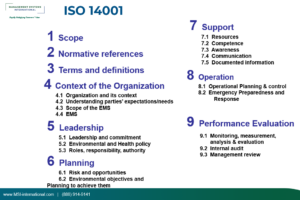
Understanding ISO 14001 Requirements
Before implementing ISO 14001, it's essential to understand its core requirements. The standard focuses on several key areas, including integrated process management strategies.
- Environmental Policy: Develop a policy that outlines your company's commitment to environmental management.
- Planning: Identify environmental aspects and impacts, set objectives and targets, and develop plans to achieve them.
- Implementation: Establish roles and responsibilities, provide training, and ensure effective communication.
- Monitoring and Measurement: Track performance, conduct audits, and review progress.
- Continuous Improvement: Regularly review and improve the EMS to ensure ongoing compliance and performance enhancement.
Conducting an Initial Environmental Review
Assessing Current Environmental Performance
The first step in implementing ISO 14001 is to decide the scope of initial certification. For the selected scope, create a project plan and then assess your current environmental performance. Then, update the initial drafted plan. This involves conducting a comprehensive review of your business's activities, products, and services to identify their environmental impacts. See our Executive Brief and Kickoff and Strategic Development Trainings

Begin by examining areas such as energy usage, waste management, water consumption, and emissions. Collect data and analyze it to understand where your business stands in terms of environmental performance.
Identifying Main Environmental Aspects and Impacts
Once you have assessed your current performance, the next step is to identify the main environmental aspects and impacts. Environmental aspects are elements of your business's activities, products, or services that interact with the environment. Impacts are the changes that these aspects cause in the environment.
For example, if your business manufactures products, an environmental aspect could be the use of raw materials, and the impact could be resource depletion. Identifying these aspects and impacts will help you prioritize areas for improvement. Another example would be if the company designs its own products, then selects sources that are least harmful and still provide quality products.
Engaging Employees in the Review Process
Engaging employees in the initial environmental review is crucial. Employees often have valuable insights into the day-to-day operations and can identify areas where improvements can be made.
Involve employees by conducting workshops, surveys, and interviews. Encourage them to share their ideas and suggestions for reducing the business's environmental impact. This engagement not only helps identify areas for improvement but also fosters a sense of ownership and commitment to the EMS.
Establishing Environmental Objectives and Targets
Setting Realistic and Measurable Goals
After identifying the main environmental aspects and impacts, the next step is to establish environmental objectives and targets. Objectives are the overall goals you want to achieve, while targets are the specific, measurable steps you will take to achieve those objectives. For further insights, you can explore mastering management systems for sustainable business growth.
When setting objectives and targets, ensure they are realistic and achievable. Use the SMART criteria to guide you:
- Specific: Clearly define what you want to achieve.
- Measurable: Ensure you can track progress and measure success.
- Achievable: Set realistic goals, given your resources and constraints.
- Relevant: Align goals with your business's overall strategy and ISO 14001 requirements.
- Time-bound: Set a timeframe for achieving the goals.
Creating Procedures and Work Instructions
Developing clear procedures and work instructions is essential for the effective implementation of the EMS. Procedures outline the steps needed to achieve specific environmental objectives, while work instructions provide detailed guidance on how to perform specific tasks. This is best accomplished through set of interviews to educate and get inputs as to how the process would best be effective.
When creating procedures and work instructions, ensure they are easy to understand and follow. Use simple language and provide visual aids, such as flowcharts or diagrams, to help employees grasp the processes. Regularly review and update these documents to reflect any changes in practices or regulations.
Documentation and Record-Keeping Essentials
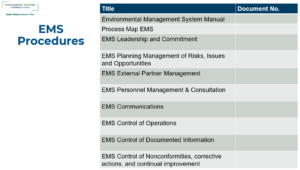
Proper documentation and record-keeping are vital components of an effective Environmental Management System (EMS). Keeping detailed records helps track progress, demonstrate compliance with ISO 14001, and provide evidence during internal and registrar audits. Start by creating a comprehensive document control system to manage all EMS-related documents.
Ensure that documents such as environmental policies, procedures, and work instructions are easily accessible and regularly updated. Maintain records of training sessions, internal audits, and management reviews to show continuous improvement and commitment to environmental management.
Roles and Responsibilities in the EMS
Clearly defining roles and responsibilities within the EMS is crucial for its success. Assign specific tasks and responsibilities to individuals or teams to ensure that all aspects of the EMS are covered. This helps create accountability and ensures that everyone knows their part in achieving environmental objectives.
- Top Manager Sponsor: Ensure that a leadership representative is assigned to ensure commitment throughout
- Environmental Manager: Oversees the EMS and ensures compliance with ISO 14001 requirements.
- Department Heads: Implement EMS procedures within their respective departments and monitor performance.
- Employees: Follow EMS procedures and participate in training and improvement initiatives.
- Internal Auditors: Conduct regular audits to assess the effectiveness of the EMS and identify areas for improvement.
By clearly defining these roles, you create a structured approach to managing your environmental responsibilities.
Implementing the EMS
With your EMS framework in place, it's time to implement it across your organization. This involves training employees, integrating the EMS into daily operations, and ensuring effective communication and engagement.
Training Employees and Building Awareness
Training is a critical component of EMS implementation. Employees need to understand the importance of environmental management and their role in achieving the company's environmental objectives. Start by providing comprehensive training sessions that cover ISO 14001 requirements, EMS procedures, and specific responsibilities.
Besides formal training, build awareness through regular communication, such as newsletters, posters, and meetings. Encourage employees to share their ideas and suggestions for improving environmental performance. This helps create a culture of environmental responsibility within the organization. See our ISO 14001 Overview Training
- Conduct initial training sessions for all employees.
- Provide ongoing training to address any updates or changes.
- Use various communication channels to keep employees informed and engaged.

Integrating EMS Into Daily Operations
For the EMS to be effective, it must be integrated into the daily operations of your business. This means embedding environmental management practices into all aspects of your operations, from procurement and production to waste management and transportation.
Start by reviewing your current processes and identifying opportunities to incorporate environmental considerations. For example, you might implement energy-saving measures, reduce waste through recycling programs, or source materials from sustainable suppliers.
- Review and update operational procedures to include environmental considerations.
- Implement energy-saving measures and waste reduction programs.
- Source materials from sustainable suppliers.
By integrating the EMS into daily operations, you ensure that environmental management becomes a natural part of your business processes. For more insights, check out this step-by-step guide on implementing ISO 14001.
Ensuring Proper Communication and Engagement
Effective communication and engagement are key to the success of your EMS. Regularly communicate with employees, stakeholders, and other interested parties about your environmental objectives, progress, and achievements. Use various communication channels, such as meetings, reports, and social media, to keep everyone informed and engaged.
Besides communication, employees and stakeholders in the EMS should be actively engaged. Encourage them to participate in environmental initiatives, provide feedback, and contribute ideas for improvement. This helps build a sense of ownership and commitment to the EMS.
Monitoring, Measuring, and Evaluating EMS Performance
Once the EMS is implemented, it's crucial to monitor, measure, and evaluate its performance regularly. This helps ensure that the EMS is effective and identifies areas for improvement. For more insights, check out our guide on integrated process management strategies.
Key Performance Indicators to Track
Tracking key performance indicators (KPIs) is essential for measuring the success of your EMS. KPIs provide quantifiable data that helps you assess your environmental performance and progress towards achieving your objectives.
Identify relevant KPIs based on your environmental objectives and targets. For example, if one of your objectives is to reduce energy consumption, a KPI could be the percentage reduction in energy usage over a specific period. Regularly review and analyze these KPIs to track progress and make informed decisions.
Conducting Internal Audits
Internal audits are a critical part of the ISO 14001 implementation process. These audits help assess the effectiveness of the EMS, identify areas for improvement, and ensure compliance with ISO 14001 requirements. Conduct regular internal audits to evaluate your EMS and address any non-conformities.
“Internal audits provide valuable insights into the performance of your EMS and help identify opportunities for improvement. Conducting regular audits ensures that your EMS remains effective and compliant with ISO 14001 requirements.”
During an internal audit, review your EMS documentation, interview employees, and observe operations to assess compliance with procedures and identify potential issues. Document the findings and develop action plans to address any identified non-conformities.
Management Reviews and Continuous Improvement
Management reviews are essential for ensuring the ongoing effectiveness of your EMS. These reviews involve evaluating the EMS's performance, identifying areas for improvement, and making decisions on necessary changes. For more insights on maintaining excellence, check out Quality Directors' secrets to success.
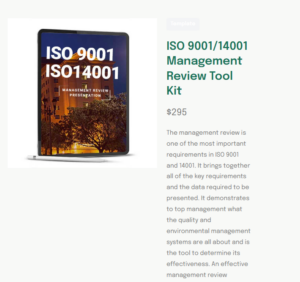
Conduct regular management reviews to assess the EMS's performance and ensure it aligns with your business's overall strategy. Use the findings from internal audits, KPIs, and employee feedback to inform these reviews and drive continuous improvement. See our Management Review Tool Kit, especially if ISO 9001 Certified.
By regularly reviewing and improving your EMS, you can ensure that it remains effective, compliant, and aligned with your environmental objectives.
Continual Improvement and Certification
Achieving ISO 14001 certification is a significant milestone for any business. However, it’s not the end of the journey. Continuous improvement is essential to maintain certification and ensure ongoing compliance with ISO 14001 requirements.
Steps to Achieve ISO 14001 Certification
- Conduct a Gap Analysis: Identify areas where your current practices do not meet ISO 14001 requirements.
- Develop an Implementation Plan: Outline the steps needed to address gaps and achieve compliance.
- Implement the EMS: Put your Environmental Management System into action across the organization.
- Conduct Internal Audits: Regularly review and assess the effectiveness of your EMS.
- Engage an External Auditor: Hire a certified body to conduct an external audit and verify compliance.
- Obtain Certification: If the external audit is successful, you will receive ISO 14001 certification.
Following these steps ensures that your business is well-prepared for the certification process and can demonstrate its commitment to environmental responsibility.
Maintaining and Improving Your EMS
Once certified, maintaining and improving your EMS is crucial. Regularly review your environmental objectives and targets to ensure they remain relevant and achievable. Continuously monitor your environmental performance and make necessary adjustments to improve efficiency and reduce impact.
Conduct periodic internal audits and management reviews to assess the effectiveness of your EMS and identify opportunities for improvement. Engage employees in the process by encouraging them to provide feedback and suggestions for enhancing environmental performance.
Celebrating Milestones and Achievements
Recognizing and celebrating milestones and achievements is essential for maintaining motivation and engagement. Celebrate successes such as completion of procedures and of course upon achieving certification, meeting environmental targets, or implementing new initiatives. Share these achievements with employees, stakeholders, and customers to demonstrate your commitment to environmental responsibility.
Publicly recognizing achievements can also enhance your business's reputation and build trust with stakeholders. Consider issuing press releases, sharing updates on social media, or hosting events to celebrate your environmental accomplishments.
Case Studies of Successful ISO 14001 Implementation
Learning from the experiences of other businesses can provide valuable insights and inspiration for your ISO 14001 implementation journey. Here are a few success stories from various industries:
Success Stories from Various Industries
Examples of a Manufacturing Implementing: A small manufacturing company successfully implemented ISO 14001 by focusing on waste reduction and energy efficiency. By engaging employees in the process and setting clear objectives, they reduced waste by 20% and energy consumption by 15% within the first year.
Examples of a Retail Implementing: A retail chain achieved ISO 14001 certification by implementing sustainable sourcing practices and reducing packaging waste. They partnered with suppliers to source eco-friendly materials and introduced a recycling program for customers, significantly reducing their environmental footprint.
Case Study 1: Toyota Motor Corporation
Background: Toyota, a global leader in the automotive industry, is well-known for its commitment to sustainability. The company adopted ISO 14001 to improve its environmental management practices across its global operations.
Implementation:
- Toyota integrated ISO 14001 into its existing Total Quality Management (TQM) systems, ensuring that environmental considerations became part of its core business processes.
- The company set ambitious environmental targets, such as reducing CO2 emissions, minimizing waste, and promoting recycling.
- Toyota conducted comprehensive training for employees at all levels to raise awareness and foster a culture of environmental responsibility.
Results:
- Significant reduction in waste generation and energy consumption across its manufacturing plants.
- Achieved a substantial decrease in CO2 emissions, aligning with global climate goals.
- Enhanced reputation as a sustainable and environmentally responsible company, strengthening customer loyalty and brand value.
Case Study 2: The Coca-Cola Company
Background: The Coca-Cola Company, a global beverage giant, sought to enhance its environmental sustainability efforts by adopting ISO 14001 across its bottling plants worldwide.
Implementation:
- Coca-Cola conducted a thorough environmental impact assessment to identify key areas for improvement, such as water usage, energy efficiency, and waste management.
- The company established an Environmental Management System (EMS) in line with ISO 14001, focusing on reducing its environmental footprint and enhancing resource efficiency.
- Regular audits and monitoring were implemented to ensure compliance with ISO 14001 standards and continuous improvement.
Results:
- Achieved significant reductions in water usage and improved water efficiency across its bottling plants, supporting its global water stewardship goals.
- Enhanced waste management practices, leading to increased recycling rates and reduced landfill waste.
- Strengthened its global reputation as a leader in sustainability, positively impacting stakeholder relations and customer trust.
Case Study 3: Dell Technologies
Background: Dell Technologies, a leading provider of IT hardware and services, adopted ISO 14001 to reinforce its commitment to sustainability and reduce the environmental impact of its operations.
Implementation:
- Dell developed an Environmental Management System that aligned with ISO 14001 standards, focusing on areas such as energy consumption, waste reduction, and sustainable product design.
- The company set clear environmental objectives, such as achieving zero waste in manufacturing and increasing the use of renewable energy.
- Dell engaged suppliers and partners to ensure that the entire supply chain adhered to ISO 14001 principles, promoting sustainable practices beyond its operations.
Results:
- Dell achieved its goal of zero waste in several manufacturing facilities and significantly reduced its overall environmental footprint.
- Increased use of renewable energy across its operations, contributing to the company's carbon reduction targets.
- Improved relationships with stakeholders, including customers and investors, by demonstrating a strong commitment to sustainability and corporate responsibility.
Case Study 4: IKEA Group
Background: IKEA, a global leader in the home furnishings market, implemented ISO 14001 to further its sustainability agenda and ensure responsible resource use across its supply chain.
Implementation:
- IKEA adopted a systematic approach to environmental management by integrating ISO 14001 into its operational processes and supply chain management.
- The company focused on sourcing sustainable materials, reducing waste, and improving energy efficiency in its stores and warehouses.
- IKEA launched various sustainability initiatives, such as the “People & Planet Positive” strategy, to engage employees, suppliers, and customers in its sustainability efforts.
Results:
- Significant reduction in waste sent to landfills and increased recycling rates across its global operations.
- Achieved notable energy savings and increased the use of renewable energy sources in its stores and warehouses.
- Strengthened brand reputation as a sustainability leader in the retail sector, attracting eco-conscious consumers and enhancing customer loyalty.
Case Study 5: Siemens AG
Background: Siemens, a global powerhouse in electronics and electrical engineering, implemented ISO 14001 to enhance its environmental management practices and support its sustainability goals.
Implementation:
- Siemens integrated ISO 14001 into its global operations, focusing on reducing emissions, improving energy efficiency, and promoting sustainable innovation.
- The company established a robust Environmental Management System to monitor and manage environmental risks and opportunities across its diverse business units.
- Siemens invested in training and development programs to equip employees with the knowledge and skills needed to support the company's sustainability objectives.
Results:
- Reduced greenhouse gas emissions by optimizing energy use and implementing energy-efficient technologies in its operations.
- Enhanced sustainability of its products and services, driving innovation in green technologies and solutions.
- Improved competitive advantage by aligning with global sustainability trends and meeting the increasing demand for environmentally responsible products.
These case studies demonstrate how different organizations have successfully implemented ISO 14001 to drive sustainability and improve business outcomes. By adopting ISO 14001, companies can not only enhance their environmental performance but also gain a competitive edge, strengthen stakeholder relationships, and build a reputation as responsible corporate citizens.
Case Study 6: Green Leaf Cafe
Background: Green Leaf Cafe, a small, family-owned restaurant in North Carolina, decided to adopt ISO 14001 to enhance its commitment to sustainability and reduce its environmental impact. The cafe, known for its locally sourced, organic menu, wanted to align its operational practices with its values of environmental responsibility.
Implementation:
- Green Leaf Cafe began by conducting an initial environmental review to identify key areas for improvement, such as waste management, energy usage, and water conservation.
- The cafe developed an Environmental Management System (EMS) based on ISO 14001 standards, focusing on reducing waste by composting food scraps and eliminating single-use plastics.
- To minimize energy consumption, the cafe installed energy-efficient lighting and kitchen appliances. It also introduced water-saving fixtures to reduce water usage.
- Employees were trained on sustainable practices, such as proper waste segregation and energy-saving techniques, to ensure that everyone contributed to the cafe's sustainability goals.
Results:
- Green Leaf Cafe successfully reduced its waste output by 40% through composting and recycling efforts, contributing to a significant reduction in landfill waste.
- The cafe lowered its energy costs by 25% due to the installation of energy-efficient appliances and lighting, resulting in immediate cost savings and a smaller carbon footprint.
- By implementing water conservation measures, the cafe decreased its water usage by 30%, aligning with its commitment to sustainable resource use.
- Green Leaf Cafe enhanced its reputation within the community as an environmentally responsible business, attracting eco-conscious customers and building a loyal customer base.
Conclusion:
Adopting ISO 14001 enabled Green Leaf Cafe to demonstrate its commitment to sustainability in tangible ways, leading to reduced environmental impact and operational costs. The cafe's proactive approach to environmental management not only helped protect the planet but also strengthened its brand image and customer loyalty, proving that even small businesses can make a significant impact through sustainable practices.
Challenges Faced and Solutions Found
Implementing ISO 14001 can present challenges, but with the right approach, these can be overcome. Common challenges include limited resources, lack of employee engagement, and resistance to change. Here are some solutions:
- Limited Resources: Start with small, manageable projects and gradually expand your EMS. Seek external funding or grants to support your initiatives.
- Lack of Employee Engagement: Communicate the importance of environmental responsibility and involve employees in the process. Provide training and incentives to encourage participation.
- Resistance to Change: Address concerns and highlight the benefits of ISO 14001 implementation. Show how it aligns with the business's overall goals and can lead to cost savings and improved reputation.
Key Takeaways and Lessons Learned
From these case studies, several key takeaways emerge:
- Engaging employees and fostering a culture of environmental responsibility is crucial for success.
- Start with small, achievable projects and gradually expand your EMS.
- Communicate the benefits of ISO 14001 to overcome resistance to change.
- Regularly review and improve your EMS to ensure ongoing compliance and performance enhancement.
By learning from the experiences of others, you can navigate the challenges of ISO 14001 implementation and achieve your environmental objectives.
Frequent Questions on Implementing ISO 14001
What is ISO 14001?
ISO 14001 is an internationally recognized standard for Environmental Management Systems (EMS). It provides a framework for organizations to manage their environmental responsibilities systematically and sustainably. By implementing ISO 14001, businesses can reduce their environmental impact, comply with legal requirements, and improve their overall environmental performance.
How long does it take to implement ISO 14001?
The time required to implement ISO 14001 varies depending on the size and complexity of the organization. For small businesses, the process can take between six months to a year. Larger organizations may require more time due to the complexity of their operations and the need for extensive documentation and training. It is essential to conduct a thorough gap analysis and develop a detailed implementation plan to ensure a smooth and efficient process.