Key Takeaways
- ISO certification enhances business credibility by showcasing commitment to quality and international standards.
- ISO 9001:2015 is in high demand, with companies using it to improve processes and customer satisfaction.
- Environmental standards like ISO 14001 are gaining traction due to increased focus on sustainability.
- The adoption of ISO 7101 as the newest ISO Standard for Healthcare Quality Management System
- Technological advancements are simplifying the certification process, making it more accessible to businesses.
- Expanding into emerging markets offers opportunities for growth in ISO certification.
Remarkable Growth Trajectory
The ISO certification market is on a remarkable growth trajectory, projected to reach an impressive $19.8 billion by 2031. This growth is driven by an increasing focus on quality management and regulatory compliance across various industries. Let's delve into the key factors contributing to this market expansion and what it means for businesses worldwide. Management Systems in place are the true means in scaling any business.
The Rising Demand for ISO Certification
ISO certifications have become a cornerstone for organizations aiming to enhance their credibility, improve operational efficiency, and meet global market demands. The standards provide guidelines and frameworks that help companies optimize processes, minimize risks, and enhance customer satisfaction. As businesses prioritize quality and compliance, the demand for ISO certification continues to grow.
Market Growth Projections
According to Persistence Market Research, the ISO certification market, which stood at $10.2 billion in 2024, is expected to nearly double by 2031, registering a compound annual growth rate (CAGR) of 9.90%. This growth is fueled by several factors, including:
- Stringent Regulatory Requirements: Increasing regulatory requirements across industries are pushing organizations to adopt ISO standards to ensure compliance and avoid penalties.
- Global Trade Expansion: As businesses expand their operations globally, adhering to international standards becomes crucial for market entry and competitiveness.
- Awareness and Benefits: Growing awareness about the benefits of ISO certification, such as improved risk management, operational efficiency, and customer trust, is driving adoption.
- Technological Advancements: The rise of digital certification platforms and AI-driven audit solutions is making the certification process more efficient and accessible.
Key Market Drivers
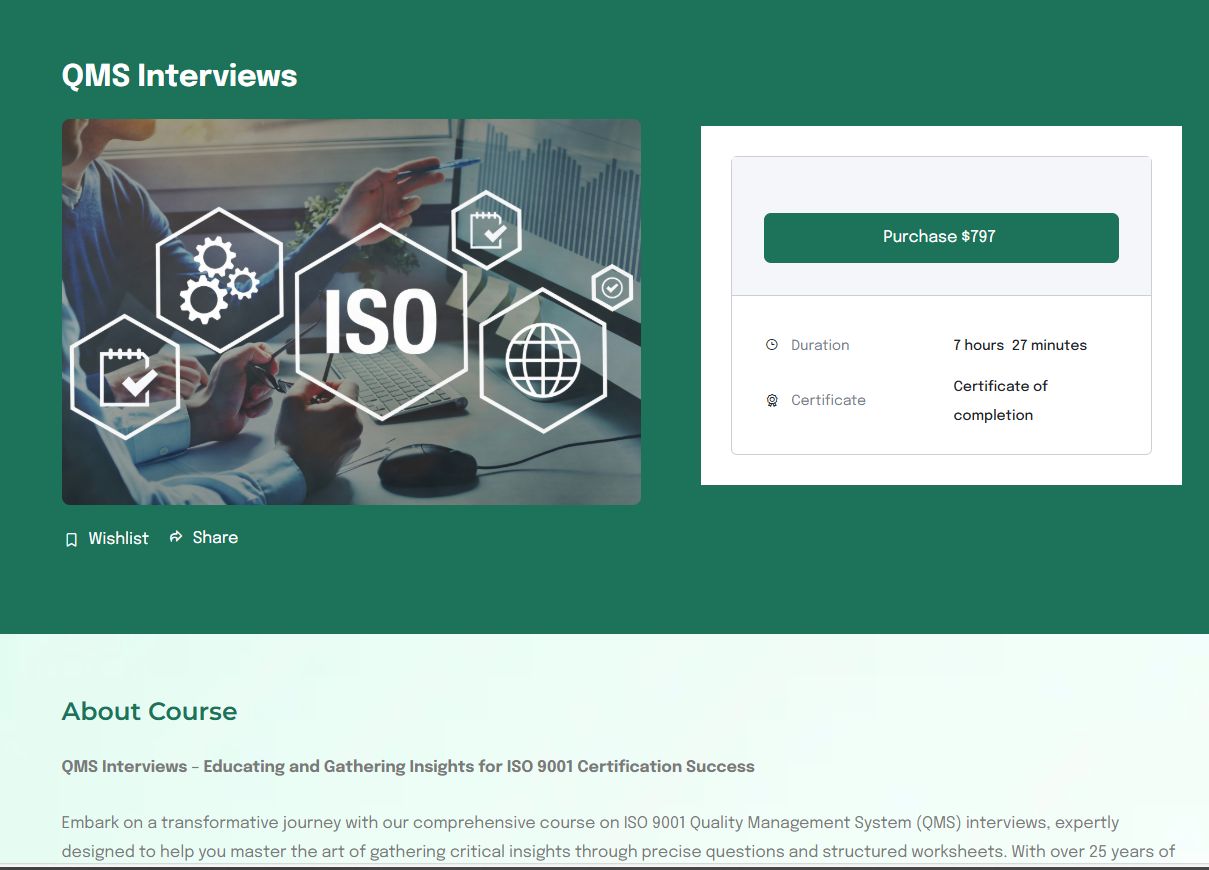
One of the primary drivers of the ISO certification market is the emphasis on quality management and regulatory compliance. Organizations across various sectors recognize the importance of maintaining high-quality standards to meet customer expectations and regulatory mandates. This focus on quality is not just about compliance but also about enhancing overall business performance and customer satisfaction. See our QMS Interview Course
The Role of Digital Transformation
The adoption of digital certification platforms and AI-driven audit solutions is expected to further accelerate market growth. These technologies streamline the certification process, making it more efficient and reducing the time and cost involved. As a result, more businesses are likely to pursue ISO certification, contributing to the market's expansion.
Why Earn Certification Sooner Rather Than Later
Obtaining ISO certification sooner rather than later can provide several strategic advantages for businesses:
- Competitive Edge: Early certification can set your business apart from competitors who have not yet achieved this standard. It signals to customers and partners that your organization is committed to quality and excellence.
- Market Access: Many industries and markets require ISO certification as a prerequisite for doing business. Achieving certification early can open doors to new opportunities and partnerships.
- Risk Mitigation: Implementing ISO standards helps identify and mitigate risks early on, preventing potential issues that could arise from non-compliance or operational inefficiencies.
- Customer Trust: Customers are more likely to trust and do business with companies that have proven their commitment to quality through ISO certification. This can lead to increased customer loyalty and repeat business.
- Operational Efficiency: The process of obtaining ISO certification involves optimizing and standardizing processes, which can lead to improved operational efficiency and cost savings in the long run.
Significance of ISO Certification in Business Success
ISO certification plays a pivotal role in setting businesses apart from their competitors. It acts as a badge of credibility, demonstrating a company's commitment to maintaining high standards. This certification is recognized globally, making it a vital asset for businesses looking to expand their market reach.
Impact on Business Credibility
When a business achieves ISO certification, it signals to clients and partners that it adheres to internationally recognized standards. This boosts the company's reputation, making it a more attractive option for potential customers. Most importantly, it builds trust, which is a cornerstone of any successful business relationship.
Benefits in Process Optimization
ISO certification isn't just about external validation; it also drives internal improvements. By following ISO guidelines, businesses can streamline their processes, leading to enhanced efficiency and reduced waste. This optimization not only cuts costs but also improves product quality, thereby increasing customer satisfaction. Rarely do non-certified companies have internal audits done routinely to demonstrate meeting to any rigorous standards.
Consider a manufacturing company that adopts ISO 9001:2015. By focusing on quality management principles, the company can identify inefficiencies in its production line. As a result, it can implement changes that lead to faster production times and fewer defects.
Role in Global Market Access
For businesses eyeing international markets, ISO certification is often a prerequisite. It opens doors by ensuring that products and services meet global standards. Therefore, companies with ISO certification can confidently enter new markets, knowing they comply with local regulations and expectations.
For instance, a company certified with ISO 14001 can demonstrate its commitment to environmental management. This can be particularly advantageous in regions with stringent environmental regulations, giving the company a competitive edge.
Current Trends Shaping the ISO Certification Market
The landscape of ISO certification is evolving, influenced by various factors such as technological advancements and changing consumer expectations. Staying abreast of these trends is crucial for businesses aiming to leverage ISO certification effectively.
Growth in Demand for ISO 9001:2015
ISO 9001:2015 remains a cornerstone for quality management systems. Its popularity continues to grow as businesses recognize the benefits of a structured approach to quality assurance. Companies are increasingly adopting this certification to enhance their operational efficiency and improve customer satisfaction. Along with ISO 13485 which is for the medical device industry and is actually ISO 9001:2008 version.
Moreover, ISO 9001:2015 is not limited to manufacturing industries. Service sectors, including healthcare and education, are also embracing this standard to ensure quality service delivery. We as MSI have implemented for design houses and temporary employee solutions.
Environmental and Information Security Focus
With rising environmental concerns, standards like ISO 14001 are becoming more prominent. Businesses are under pressure to demonstrate their commitment to sustainable practices. ISO 14001 provides a framework for implementing effective environmental management systems.
- ISO 14001 helps companies reduce their environmental footprint.
- It supports compliance with environmental regulations, minimizing legal risks.
- Adopting ISO 14001 can enhance a company's brand image as environmentally responsible.
Similarly, ISO 27001, which focuses on information security management, is gaining traction. In an era where data breaches are prevalent, businesses must safeguard their information assets. ISO 27001 offers a systematic approach to managing sensitive information, ensuring it remains secure.
The newest ISO 7101 for the healthcare sector and was released Feb 2023. Stands to really benefit an industry needing a management system to correct failing issues with healthcare.
Factors Driving ISO Certification Market Growth
The ISO certification market is experiencing significant growth due to several key factors. As businesses strive to maintain competitiveness and credibility, the demand for ISO certifications continues to rise. This growth is driven by the need to comply with regulatory requirements, improve customer satisfaction, and adapt to evolving industry standards.
Increasing Regulatory Compliance Requirements
Governments and regulatory bodies worldwide are tightening regulations across various industries. This is especially true in sectors like healthcare, finance, and manufacturing, where compliance with international standards is non-negotiable. ISO certifications provide a structured framework for businesses to meet these regulatory requirements, ensuring that they operate within the legal boundaries and avoid costly penalties.
Emphasis on Customer Satisfaction and Quality Assurance
In today's competitive marketplace, customer satisfaction is paramount. Businesses are increasingly focused on delivering high-quality products and services to retain customers and build brand loyalty. ISO certifications, such as ISO 9001:2015, emphasize quality management principles that help businesses enhance their product and service quality.
By adopting ISO standards, companies can implement effective quality control measures, leading to fewer defects and improved customer satisfaction. This not only boosts a company's reputation but also increases its chances of gaining repeat business and positive referrals.
Evolution in Industry Standards
Industries are constantly evolving, and with this evolution comes the need for updated standards. ISO continuously revises its standards to reflect the latest industry practices and technological advancements. Businesses seeking to stay ahead of the curve are keen to adopt these updated standards to ensure they remain competitive.
For instance, the introduction of ISO 45001 for occupational health and safety management reflects the growing emphasis on employee welfare and workplace safety. Companies that prioritize these aspects are more likely to attract and retain top talent, giving them a competitive edge.
Challenges and Opportunities in the ISO Certification Market
While the ISO certification market offers numerous benefits, it also presents certain challenges. Businesses must navigate these challenges to fully capitalize on the opportunities available in the market.
Overcoming Certification Cost Barriers
- Initial certification costs can be high, deterring smaller businesses.
- Ongoing maintenance and recertification costs add to the financial burden.
- Businesses must weigh the cost against the potential return on investment.
Despite these challenges, there are ways to mitigate costs. Companies can seek government grants or subsidies aimed at supporting businesses in obtaining ISO certification. Additionally, implementing efficient internal processes can reduce the time and resources required for certification.
Collaboration with experienced consultants can also streamline the certification process, ensuring that businesses achieve certification efficiently and cost-effectively.
Opportunities in Emerging Markets
Emerging markets present a wealth of opportunities for ISO certification growth. As these markets develop, there is an increasing demand for quality assurance and compliance with international standards. Businesses operating in emerging markets can leverage ISO certification to differentiate themselves from local competitors and gain access to global markets.
For example, in regions like Southeast Asia and Africa, where infrastructure development is booming, ISO certifications in construction and environmental management are becoming increasingly important. Companies that invest in certification can position themselves as leaders in these growing markets.
Adapting to Technological Advancements
Technology is transforming the way businesses operate, and the ISO certification market is no exception. Digital tools and platforms are simplifying the certification process, making it more accessible to businesses of all sizes. Online training and certification programs reduce the need for physical presence, saving time and resources.
Furthermore, advancements in data analytics enable companies to track their compliance more effectively, ensuring they maintain certification standards. By embracing these technological advancements, businesses can streamline their certification journey and achieve better outcomes.
Future Outlook: ISO Certification Market Prospects
Looking ahead, the ISO certification market is poised for continued growth. As businesses increasingly recognize the value of certification in enhancing their operations and reputation, demand for ISO standards will remain strong. The introduction of new standards and the revision of existing ones will further drive market expansion.
Businesses that proactively seek ISO certification will be better positioned to navigate regulatory challenges, meet customer expectations, and capitalize on emerging market opportunities. By leveraging the benefits of ISO certification, companies can elevate their standards and achieve long-term success in the global marketplace.
Predicted Market Size and Growth Rate
The ISO certification market is expected to witness substantial growth over the next decade. With businesses increasingly recognizing the benefits of adhering to international standards, the demand for ISO certifications is set to rise. According to industry forecasts, the market size is projected to grow at a compound annual growth rate (CAGR) of approximately 6-8% from 2024 to 2034.
This growth is driven by several factors, including the globalization of businesses, increased regulatory requirements, and a heightened focus on quality and sustainability. As companies strive to improve their operations and expand into new markets, ISO certification will remain a key tool for achieving these objectives.
Potential for New Standards and Certifications
The evolving business landscape and technological advancements present opportunities for the development of new ISO standards. As industries innovate, there is a growing need for standards that address emerging challenges and opportunities. For instance, the rise of digital technologies and cybersecurity concerns have led to the creation of standards like ISO/IEC 27032 for cybersecurity management.
Moreover, as environmental sustainability becomes a top priority, new standards focusing on carbon management and sustainable practices are likely to emerge. These standards will provide businesses with the frameworks needed to address environmental challenges and demonstrate their commitment to sustainability.
Strategies for Businesses to Leverage ISO Certification
To fully leverage ISO certification, businesses should consider the following strategies:
- Conduct a thorough assessment of current processes to identify areas for improvement.
- Engage with experienced consultants to guide the certification process.
- Do the hard work of finally integrating all processes with well defined written procedures.
- Invest in employee training to ensure a clear understanding of ISO standards.
- Utilize technology to streamline documentation and compliance tracking.
- Regularly review and update processes to maintain certification standards.
- Maximize the benefit of a strong internal audit program.
By implementing these strategies, businesses can maximize the benefits of ISO certification, enhance their operational efficiency, and improve their market competitiveness. For more insights, explore the ISO Certification Market Size and Share.
Moreover, businesses should actively promote their ISO certification to stakeholders, showcasing their commitment to quality and international standards. This can be done through marketing campaigns, client communications, and by displaying certification logos on products and services.
It's also crucial for businesses to stay informed about updates to ISO standards. By keeping abreast of changes, companies can ensure they remain compliant and continue to reap the benefits of certification.
Finally, businesses should leverage their ISO certification to expand into new markets. By demonstrating compliance with international standards, companies can gain a competitive edge and build trust with new customers and partners. We as MSI are one of the few consulting companies that actually writes your customized procedures and provides all necessary forms. We can even develop these in partnership with your leaders in a weeks' time with preparation and planning.
Conclusion
The ISO certification market is poised for substantial growth in the coming years, driven by regulatory requirements, global trade expansion, and technological advancements. For businesses, obtaining ISO certification is not just about compliance but also about enhancing credibility, operational efficiency, and customer satisfaction. As the market continues to grow, organizations that prioritize quality and compliance will be well-positioned to thrive in an increasingly competitive global landscape. Earning certification sooner rather than later can provide a significant competitive advantage, opening doors to new opportunities and ensuring long-term success.
Frequently Asked Questions (FAQ)
To provide further clarity on ISO certification, let's address some common questions.
What is ISO Certification and how does it benefit businesses?
ISO certification is a formal recognition that a company adheres to international standards set by the International Organization for Standardization (ISO). These standards cover various aspects of business operations, including quality management, environmental management, and information security.
The benefits of ISO certification are manifold. It enhances a company's credibility, improves operational efficiency, and increases customer satisfaction. Additionally, it provides a competitive advantage by demonstrating a commitment to quality and compliance with international standards.
For example, a company with ISO 9001:2015 certification can showcase its dedication to quality management, which can attract new clients and retain existing ones.
Overall, ISO certification helps businesses build trust with stakeholders, reduce operational risks, and access new market opportunities.
Which industries benefit most from ISO Certification?
While ISO certification is beneficial across various industries, certain sectors derive significant advantages from it. These include manufacturing, healthcare, information technology, construction, and environmental management.
In manufacturing, ISO 9001:2015 ensures product quality and consistency. In healthcare, ISO standards improve patient safety and service delivery. In IT, ISO 27001 helps protect sensitive information, while in construction, ISO 45001 enhances workplace safety. Environmental standards like ISO 14001 are crucial for industries focusing on sustainability and environmental impact.
What are the steps to obtain ISO Certification?
Obtaining ISO certification involves several key steps, including understanding the ISO 9001 QMS Auditor Course to ensure compliance and quality management.
- Identify the relevant ISO standard for your industry and business needs.
- Conduct a gap analysis to assess current processes against the standard requirements.
- Develop and implement an action plan to address identified gaps and improve processes.
- Engage an accredited certification body to conduct an external audit.
- Address any non-conformities identified during the audit.
- Receive ISO certification upon successful completion of the audit.
It's important to maintain compliance with the standard to retain certification, which may involve periodic surveillance audits.
How does ISO Certification impact a company’s global market presence?
ISO certification significantly enhances a company's global market presence by providing assurance of quality and compliance with international standards. This can open doors to new markets and facilitate trade with international partners. For more insights on how ISO certification affects market dynamics, you can explore the ISO Certification Market Size and Share report.
For example, a company with ISO 14001 certification can demonstrate its commitment to environmental sustainability, making it more attractive to environmentally conscious customers and partners worldwide.
Overall, ISO certification helps companies build credibility, reduce trade barriers, and increase their competitiveness in the global market.
Are there any potential drawbacks to ISO Certification?
While ISO certification offers numerous benefits, there are potential drawbacks to consider. The certification process can be time-consuming and costly, particularly for small businesses with limited resources. Additionally, maintaining compliance requires ongoing effort and investment.
However, these challenges can be mitigated by carefully planning the certification process, seeking financial support where available, and leveraging technology to streamline compliance efforts.
Ultimately, the benefits of ISO certification often outweigh the drawbacks, providing businesses with a valuable tool for enhancing their operations and market presence.