ISO 9001 and 13485 Process Map: Double Your Key Quality Metrics
Start Nailing down your key processes and get the Process Map used by ISO experts
Get the map now!
The ISO 9001 and 13485 Process Map We Use with Customers Every Day
Fill out the form to receive this editable ISO 9001 and 13485 process map. Save hours to represent your processes today.
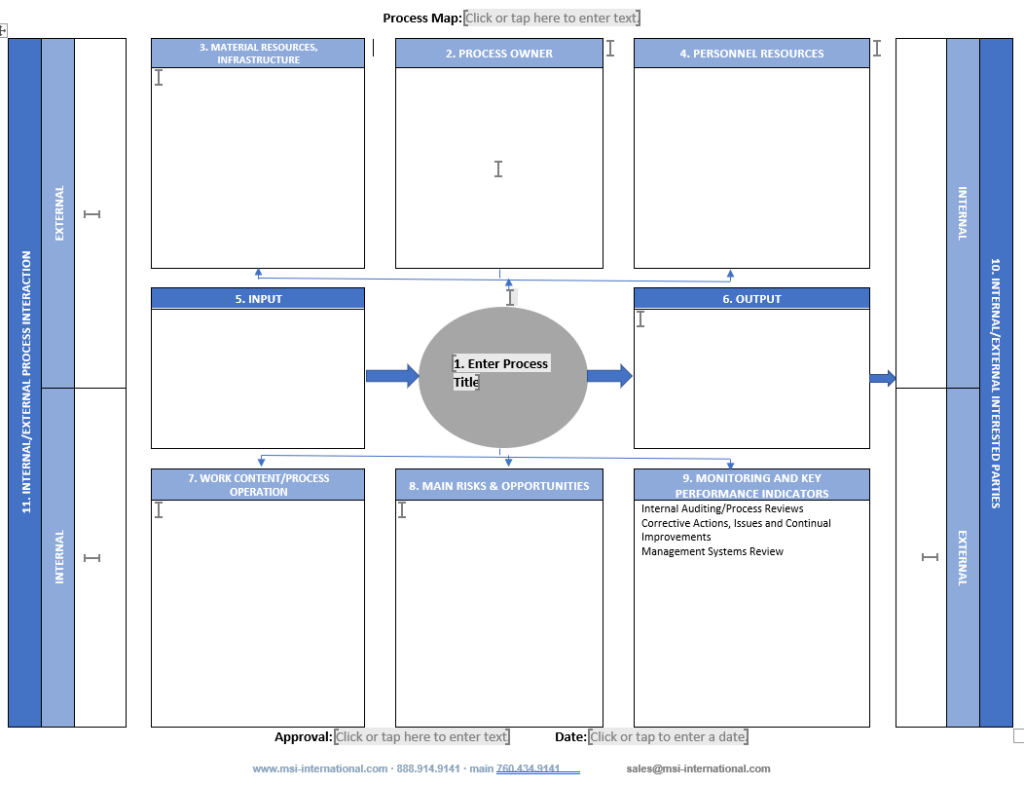
Thinking through these 11 blocks (following the sequence 1-11) can make a big difference in outlining how your key processes should flow. What’s important is identifying future thought out improvements and how the process will be measured and determined effective. A 1 page view can be a good representation for anyone part of your department.
GET THE MAP
Start Nailing down your key processes and get the Process Map used by ISO experts
How to Fill Out Your ISO 9001 and 13485 Process Map
The process map looks simple. Most people get stuck when they sit down to complete it because they try to describe the whole business at once. Work one process at a time. Start with one you know well, such as sales, and answer these questions in order.
- Owner and authority. Who is responsible for the process, and who has the authority to say the output conforms or needs rework? Responsibility is easy to name. Authority is where most maps go vague.
- Inputs. What starts the process? For sales, it is a customer inquiry or a request for quote.
- Sequence. List the main steps in order, and note which process comes before and after this one. Sales is rarely first. Leadership sets direction before sales begins.
- Controls. What checkpoints confirm the process is running as planned? Examples include equipment setup checks, approvals and contract review.
- Resources. List people by job title, not by name. Add the facilities, the work environment (temperature, lighting, cleanliness, noise and workload), and the knowledge people need, including lessons learned from past projects.
- Measures. How will you know the process delivers? For sales, track the percentage of quotes that become contract awards. Key processes need key performance indicators that support your three or four top-level quality objectives. Lower-risk processes may only need monitoring.
- Outputs and receivers. What does the process produce, and who receives it: a customer or the next internal process?
- Risks and opportunities. What could cause this process to drift from the plan, and what preventive control will you put in place?
- Outsourced steps. If a supplier, call center, staffing agency or contractor performs part of the process, record the controls. Spell them out in the purchase order or contract.
- Interactions. Which processes feed this one, and which does it hand off to? Completing this column for every process turns individual maps into a process interaction map.
When a process map is not enough
Some processes are too complex for a single map. Design and development for medical devices is a common example, with defined stages, design reviews, and interfaces with testing, marketing and procurement. In those cases the map becomes the outline for a written procedure. MSI’s ISO procedure templates and guides give you a complete working procedure to build from.
Keep the map current
When an internal audit or management review shows a process is not meeting its plan, go back to the map. The gap may mean the plan needs updating, people need training, or a corrective action is needed. Our ISO management review toolkits show how to present process performance to leadership.
MEET OUR FOUNDER
ISO Expert - Diana Lynn
Diana co-founded MSI after acquiring extensive professional experience in supply chain and program management with the United States Air Force. Trained in auditing quality management systems meeting ISO 9001 and environmental management systems meeting ISO 14001 requirements. Diana has led hundreds of companies to ISO and AS registration.